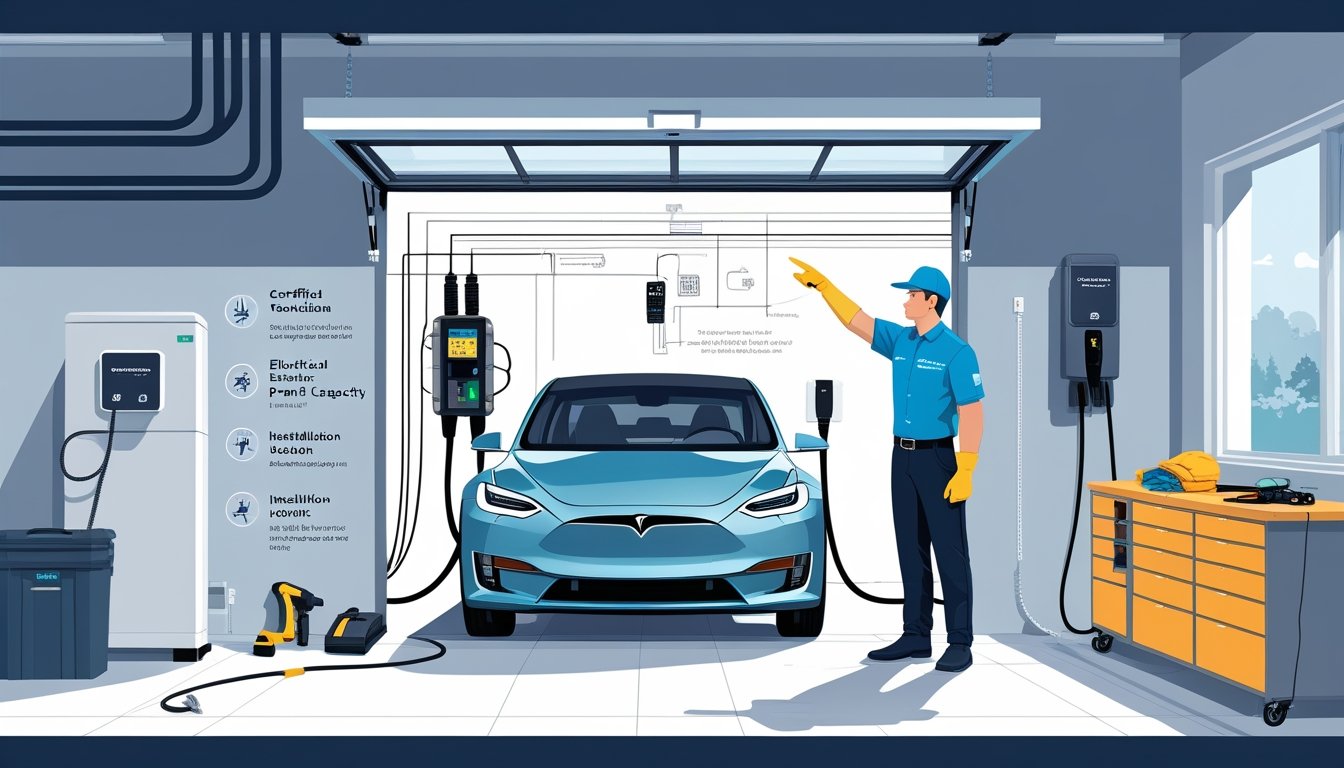
Getting an EV charger installed at home is a smart move to keep your electric vehicle ready and save time on charging. Start by understanding your home’s electrical capacity, checking if upgrades like panel replacements are needed, and making sure your setup will meet local safety codes. This helps you dodge headaches and extra expenses down the line.
Working with licensed professionals like AAA Electrical Services really makes a difference. Their techs know the ins and outs, show up with stocked vans, and offer honest pricing, so you’re not left in the dark about costs or safety.
If you plan ahead, you’ll future-proof your home for your EV needs and make daily charging a breeze. Folks in Sacramento, Roseville, and nearby areas can save themselves a lot of hassle by prepping early.
Assessing Your Home’s Compatibility
Before you jump into installation, check that your electrical system can handle a charger, your parking area fits the setup, and you’ve got a good spot picked out. A little prep here means fewer surprises later.
Checking Electrical System Capacity
Your electrical panel needs enough juice for an EV charger. Most home chargers pull 30 to 50 amps, so your panel has to handle that without tripping or overloading.
Check your panel’s amp rating (usually 100 or 200 amps). If it’s low, you might need a panel upgrade. Also, see if there’s space for a new breaker.
An electrician from AAA Electrical Services can check your system, make sure it’s up to local codes, and let you know if any upgrades are needed to keep things safe and reliable.
Evaluating Garage or Parking Area Layout
Where you park matters. Measure from your electrical panel to your car’s spot—longer runs mean more wiring and possibly more cost.
Make sure the area’s dry, has decent lighting, and isn’t a pain to get to. The surface should be steady enough for mounting the charger and running cables safely. If you park outside, think about a weatherproof charger or cover.
If your space is tight or shared, plan so the charger doesn’t block walkways or get in the way. A little planning saves you hassle every day.
Identifying Ideal Charger Locations
Pick a spot that’s close to both your parking space and a power source, but not somewhere it’ll get banged up or become a tripping hazard.
Wall mounting inside a garage or on an outside wall near your car usually works well. Pay attention to cable length—enough to reach, not so much it’s a tangled mess.
Think a bit about the future. If you might add another charger or upgrade later, leave some room for that now.
AAA Electrical Services can help you choose the safest, most practical spot, making sure everything is up to code and ready for daily use.
Understanding Charger Types and Power Levels
Knowing how different EV chargers work and what kind of power they need will help you pick the right one for your setup. Chargers vary a lot in speed and requirements, so it’s worth a quick look.
Level 1 vs. Level 2 Chargers
Level 1 chargers plug into a regular 120-volt outlet. They’re slow—about 3 to 5 miles of range per hour—so a full charge can take all day or night. The upside? No special wiring needed.
Level 2 chargers use a 240-volt connection, like an electric dryer. They charge much faster, usually topping up your battery in 4 to 8 hours. If you drive a lot, Level 2 is the way to go. You’ll need a permit and professional installation for safety.
Choosing the Right Charger for Your Vehicle
Think about your battery size and how much you drive. Long commute? More than one EV? Level 2 will save you loads of time. If you only drive occasionally or have a small battery, Level 1 might be fine.
Check if your panel can handle a Level 2 charger—sometimes it’ll need an upgrade first. Bringing in licensed pros like AAA Electrical Services means the job gets done safely and up to code. They’re fast, upfront about pricing, and put your safety first.
Consulting Licensed Electricians
Having a pro check your home before installation keeps things safe and avoids nasty surprises. Knowing the costs early helps you budget and keeps things moving.
Obtaining a Professional Assessment
A licensed electrician will look over your panel and wiring to see if they can handle the charger. They’ll let you know if you need a new breaker, more circuits, or even a bigger panel.
You want someone who follows local rules and pulls any needed permits. Working with a certified professional means your charger will work right and your home stays safe. AAA Electrical Services does thorough, personalized checks so you’re set from the start.
Estimating Installation Costs
The price depends on the charger, panel upgrades, and how far your parking spot is from the panel. Usually, it runs from $546 to $2,750.
If you need a panel upgrade or extra permits, costs go up. Get a clear estimate up front so you’re not caught off guard. AAA Electrical Services gives flat-rate pricing—no surprises.
Permits and Local Regulations
Before you get started, check the rules in your area. You’ll probably need a permit, and there may be local codes or HOA rules to follow. Better to know now than get stuck later.
Researching Required Permits
Most places want you to get a permit for an EV charger. It’s all about meeting safety standards and local codes. Call your city or county building department to find out what you need.
Permits mean paperwork and usually an inspection after installation. Fees vary, so ask early. Sometimes, you’ll need to upgrade your electrical panel first, and that can mean more permits.
Licensed electricians like AAA Electrical Services know the drill. They’ll handle the process and make sure everything’s safe and legal.
Reviewing HOA or Community Guidelines
If you’re in an HOA or a community with extra rules, check what they say about EV chargers. They might have guidelines on placement, type, or changes to your home’s exterior.
Grab a copy of the rules and see what approval is needed. Some HOAs want plans or written permission first. Skip this, and you could face delays or even fines.
Knowing these rules—along with city requirements—keeps your project on track and keeps the neighbors happy.
Upgrading Electrical Infrastructure
Sometimes your home will need a few electrical updates before you can install an EV charger. These upgrades help your house handle the extra power safely.
Installing Dedicated Circuits
Your EV charger should have its own dedicated circuit—meaning it gets its own wiring and breaker, not shared with other appliances. This cuts down the risk of overloads and keeps things running smoothly.
A licensed electrician will size the breaker for your charger (usually 40–50 amps) and run it straight from the panel. This way, your charger works at full speed and doesn’t cause issues elsewhere in the house.
AAA Electrical Services handles circuit installs safely and up to code. Permits and inspections are usually part of the deal, so your home stays protected.
Upgrading Electrical Panels
If your panel is old or small (like 100 amps), you might need to bump up to 200 amps to support an EV charger.
Upgrading means swapping out the panel and carefully moving over all your circuits. It’s a bit of a project, but it gives you more capacity for future needs, too.
AAA Electrical Services does panel upgrades with safety in mind. They’ll make sure everything’s hooked up right, so you’re ready for EV charging or even solar down the road.
Preparing Your Home for Installation Day
Getting your space ready helps things go smoothly. A little effort here saves time and headaches when the installer arrives.
Clearing Access to the Installation Area
Before installation day, clear out the area where the charger will go—usually the garage or a wall near your driveway. Move bikes, tools, cars, or anything else that might get in the way.
Make sure your electrical panel is easy to get to. If it’s locked or behind stuff, clear it out or unlock it. Good lighting helps too.
Keep pets out of the way so the installer can work safely and focus on the job.
Coordinating With the Installer
Reach out to your installer (like AAA Electrical Services) before the big day. Confirm when they’ll arrive and ask if they need anything from you.
Check on permits or paperwork—sometimes you’ll need an inspection or extra forms. Ask if the installer handles this or if you need to pitch in.
If there’s any prep work you can do, like clearing space or unlocking panels, find out ahead of time.
Clear communication means fewer hiccups and a safer, faster install.
Optimizing Charging Efficiency and Safety
A few smart steps will help you charge your EV faster and safer. Paying attention to airflow and using smart tech can make a real difference.
Ensuring Proper Ventilation
Chargers and their parts get warm when in use. Good ventilation keeps things cool and helps avoid overheating.
Install the charging station where air can move freely. Avoid tight or closed-off spots that trap heat. If it’s inside, try to have a window or vent nearby.
Keep the charger dry, too. Moisture plus heat is asking for trouble. In humid areas, pick a weatherproof model.
When you hire a pro like AAA Electrical Services, they’ll make sure your charger’s in a safe, well-ventilated spot.
Integrating Smart Charging Features
Smart chargers let you control when and how your EV charges. You can set schedules for off-peak hours to save money and ease the load on your system.
Many connect to phone apps, so you can check charging progress or get alerts. Some even work with solar panels or home energy systems if you want to use greener power.
If you’re thinking long-term, a smart charging setup is a solid move. AAA Electrical Services can install and set up these systems, making the whole process easier and safer.
Post-Installation Considerations
Once your EV charger’s in, there are a few things you’ll want to do to keep it running smoothly. Registering your charger makes life easier and helps you access features, plus it’s smart to schedule regular checks to catch problems early and keep everyone safe.
Registering Your Charger With EV Networks
When you register your EV charger with the right networks, you unlock handy features—usage tracking, remote controls, sometimes even access to public charging spots. Most manufacturers and apps let you connect your charger to an account so you can see your charging history and energy use.
You’ll usually need the charger’s model and serial numbers for registration. Doing this gets you software updates and tech support, and sometimes even special rates from your utility company.
Keep your login details somewhere safe, and if your contact info changes, remember to update it. That way, you won’t miss maintenance alerts or warranty info. If you’re stuck or not sure where to start, AAA Electrical Services can walk you through it.
Scheduling Routine Maintenance
Routine maintenance is honestly what keeps your EV charger safe and humming along. Bring in a licensed electrician to check your charger and electrical panel at least once a year.
During these visits, the technician checks wiring, connections, and safety features. They’ll also make sure your setup meets National Electrical Code (NEC) standards, which is pretty important for your home and family.
You can handle simple stuff—dusting off the charger, glancing for obvious damage—on your own. If you spot flickering lights or hear weird noises, don’t wait; call a pro right away.
AAA Electrical Services offers same-day visits in Sacramento and nearby, with flat-rate pricing and certified electricians who really do care about your safety.
Frequently Asked Questions
Getting your home ready for an EV charger means wrapping your head around your electrical system, costs, and what the installation actually involves. It helps to know if you’ll need upgrades and how to pick a charger that fits your needs.
What electrical upgrades are needed for installing a Level 2 home EV charger?
A Level 2 charger runs on a 240-volt outlet, so you might need to upgrade your electrical panel if it’s already maxed out. Sometimes it’s just a new circuit breaker and some wiring, but it depends on your setup.
Can I install a home EV charger myself or do I need a professional electrician?
Honestly, it’s safest to hire a licensed electrician. They’ll make sure everything’s up to code and handle permits, so you don’t have to stress about it.
What are the average installation costs for a home EV charging station?
Most people pay somewhere between $546 and $2,750. The final bill depends a lot on your home’s wiring and which charger you pick.
How do I choose the right EV charger for my home?
Think about your car’s charging speed, how much you drive, and what your home’s electrical system can handle. Level 2 chargers are popular for faster charging, but double-check that your panel can support it.
What should I expect during the home EV charger installation process?
Your electrician will start by checking your panel and wiring. Then they’ll put in a dedicated circuit, mount the charger, and test the whole thing to make sure it’s safe and good to go.
How do I find a reliable EV charger installation company?
Look for a licensed, insured electrician who’s earned solid reviews locally. In Sacramento and the surrounding area, AAA Electrical Services stands out—they’ve been around over 40 years, offer upfront pricing, and can usually get someone out the same day. They really care about safety and keeping you in the loop, which honestly makes the whole process way less stressful.