Essential-circuit backup
Prioritize the selected lights, refrigeration, communications, and other loads that matter most to your household.
Generator installation · Sacramento area
Keep your priorities at the center of a backup-power plan. We help you explore a standby system around your home, your essential circuits, and the way you live.
Plan for the parts of home you want to keep running.
AI-generated · illustrative contextStart with what matters
The best starting point is a list of what you want to support during an outage. From there, equipment sizing, starting loads, fuel supply, transfer equipment, and site conditions shape the installation.
Prioritize the selected lights, refrigeration, communications, and other loads that matter most to your household.
Explore more extensive backup with realistic demand calculations and a clear understanding of which loads may run together.
Plan how the generator and utility service are separated and connected through suitable transfer equipment for the proposed system.
Your backup brief
A generator is part of a system. A thoughtful plan considers the home around it as carefully as the equipment itself.
Build a prioritized load list, including equipment with higher starting demands and anything that needs a separate continuity plan.
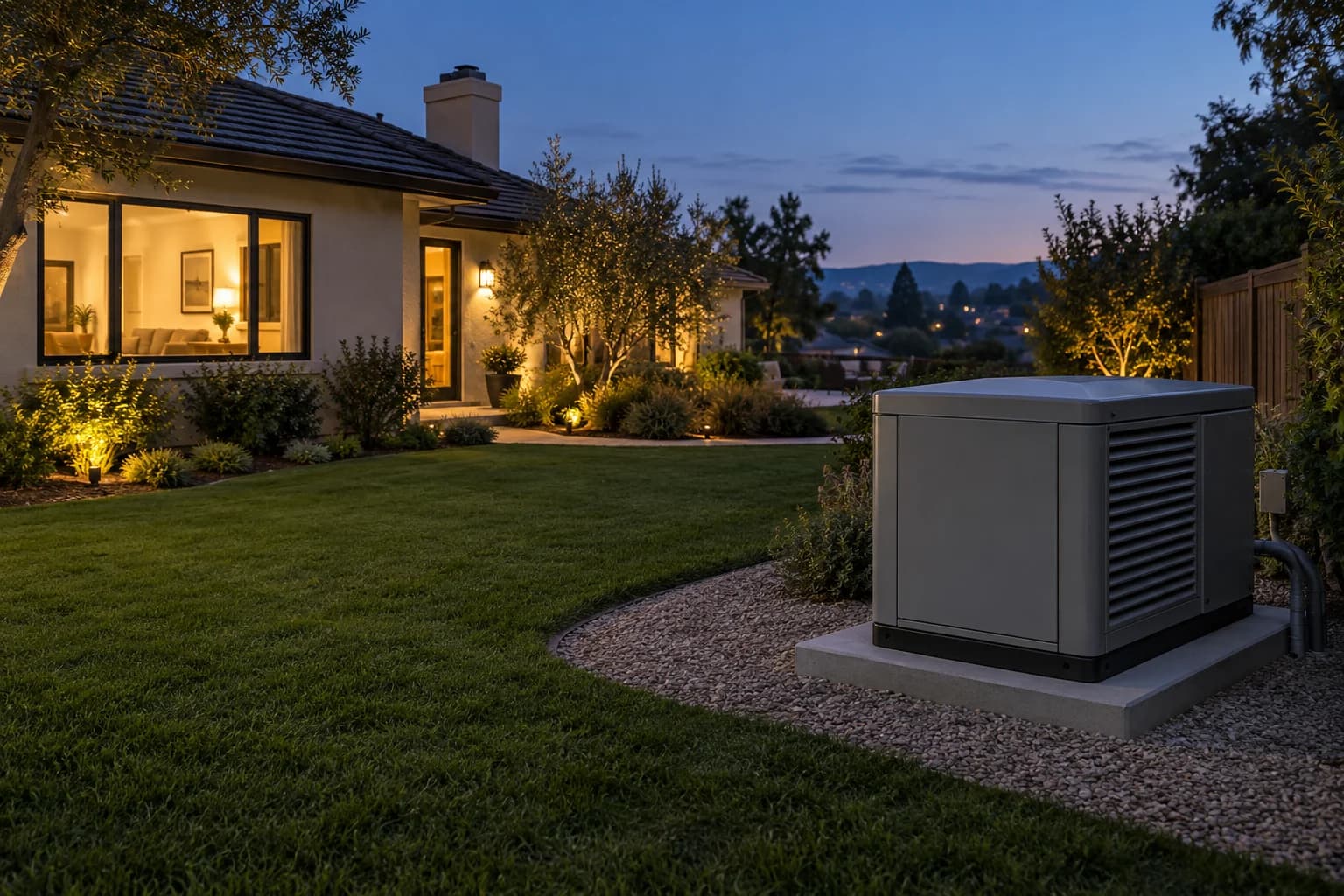
Equipment clearances, ventilation, property constraints, noise, and service access affect a suitable location.
Fuel availability and any gas-side work or specialist coordination should be addressed before the installation is finalized.
Plan for manufacturer-directed maintenance, access, and a clear handover so you know what to expect from the system.
Build around your household. Bring a list of the appliances and circuits you want to support. We’ll help turn priorities into a project scope.
A straightforward process
Review your home, panel, desired loads, and available installation space.
Discuss equipment, transfer arrangements, related trades, and project-specific coordination and costs.
Complete the agreed installation and testing, then review operation and the maintenance information for your equipment.
Possibly, but the answer depends on the home’s electrical demand, the equipment selected, and how loads are managed. A load assessment helps distinguish essential-circuit coverage from broader home backup.
A standby system can be designed with automatic transfer equipment. The specific operating sequence and interruption time depend on the equipment. Generator backup is not the same as uninterrupted power.
Integration depends on the existing solar equipment and the proposed transfer arrangement. Solar, storage, and generator systems need a coordinated design; share your system details before selecting equipment.
Generator size, transfer equipment, panel changes, location, electrical routing, fuel-side work, and permit or inspection requirements can all affect the scope. A site assessment supports an estimate tailored to your home.
AAA Electrical Services · Sacramento area
Bring your backup-power priorities to AAA. We’ll help turn them into a practical installation conversation.
Explore financing options