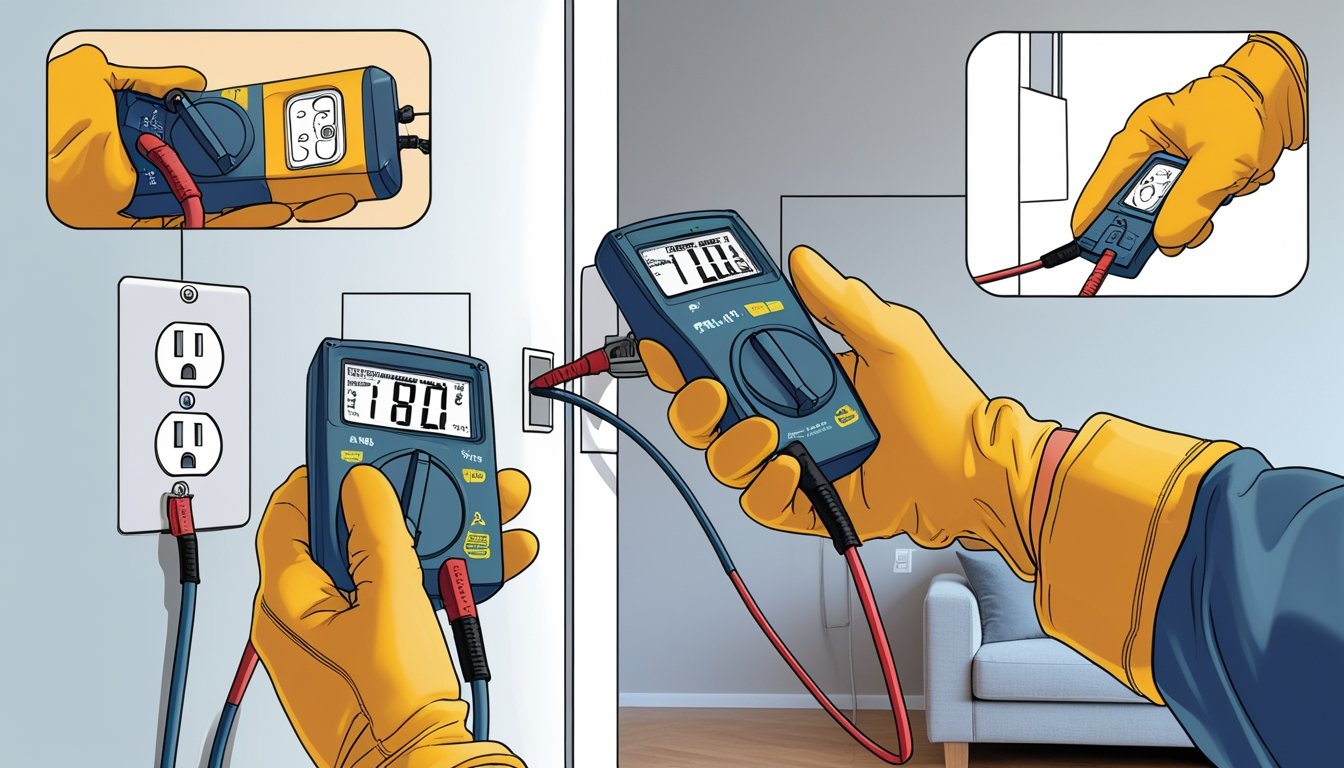
Testing your outlets for electrical problems is a straightforward way to keep your home safe and sidestep bigger headaches later. You can spot trouble like no power, sparking, or weird noises using a simple outlet tester or by plugging in different gadgets to see if they work. Catching these issues early protects your family and lets you relax a bit more.
If you run into an outlet that’s dead or looks damaged, don’t wait around. At AAA Electrical Services, we jump on electrical repairs and outlet upgrades fast—same day, even—treating your home like it’s our own. After 40+ years in Sacramento and nearby, our licensed techs make safety and clear updates a top priority.
Regular outlet tests can head off shocks, fires, or expensive repairs. Whether you’re a DIY type or you’d rather call in a pro, knowing the basics keeps your home’s electrical system humming along safely.
Safety Precautions for Testing Electrical Outlets
Before you start testing, handle power with care, gear up properly, and keep an eye out for anything sketchy. These steps are honestly non-negotiable for safety.
Turning Off Power at the Circuit Breaker
Always shut off the power to the outlet you want to check. Head to your breaker panel and flip the right switch for that area. No juice means less risk.
Double-check with a voltage tester to be sure everything’s really off before you touch wires or outlets. If you’re not sure which breaker to use, just hit the main one. With the power off, you’re way less likely to have an accident while poking around.
Using Proper Protective Equipment
Wear insulated gloves—seriously, don’t skip this. Safety glasses can keep sparks or bits out of your eyes. If you’re using tools, make sure they’ve got insulated handles.
Rubber-soled shoes are a must, especially if the floor’s damp. These basics go a long way. AAA Electrical Services always recommends proper gear for any outlet work.
Identifying Signs of Electrical Hazards
Give your outlets a once-over: are they warm, sparking, or showing cracks or discoloration? Lights that flicker or breakers that trip a lot can also point to outlet trouble. Listen for buzzing near outlets, too.
If you spot any of this, don’t use the outlet—get a pro to check it out. Faulty wiring is a big safety risk. Spotting these issues early can save you a world of trouble.
Basic Tools Needed to Test Outlets
To check outlets safely and get real answers, you need the right gear. Each tool helps you spot things like voltage problems, wiring mistakes, or safety issues. If you know how to pick and use these tools, your outlet testing will be more reliable—and your home safer.
Selecting a Voltage Tester
A voltage tester is about as basic as it gets—it tells you if electricity’s flowing to your outlet. Most are battery-powered, and you’ll find contact and non-contact types.
Non-contact testers let you check for voltage without touching wires. They beep or light up if there’s power, so they’re pretty safe and quick.
For most homes, pick one that works for 110-120 volts. Make sure it’s easy to hold and the indicators are clear. A solid tester, like the ones AAA Electrical Services uses, helps you spot live wires fast, which is huge for safety.
Using a Multimeter
A multimeter does more—it measures voltage, current, and resistance. You get more info about your outlet than just “on or off.”
Set it to AC voltage mode. Stick the probes into the outlet—one in the hot slot, one in neutral or ground. You should see about 120 volts in the U.S.
You can also check wiring by testing continuity or looking for shorts. Multimeters take a little practice, but the info is worth it. AAA Electrical Services prefers digital models for clearer readings.
GFCI Outlet Testers
GFCI testers are made for Ground Fault Circuit Interrupter outlets. These outlets cut power fast if there’s a fault, protecting you from shocks. The tester plugs in and has buttons or lights to simulate a fault.
If the GFCI works, it’ll trip and the power stops. If not, something’s wrong. These testers are cheap and easy, so they’re smart for kitchens, bathrooms, and outdoor outlets. Using one is a quick step toward protecting your family.
Step-by-Step Guide to Testing Standard Outlets
When you test an outlet, you want to know it has power, the voltage is right, and the outlet’s grounded. These checks keep your home safe and your gadgets happy.
Checking for Power
Plug in something simple like a lamp or phone charger. If it lights up, you’ve got power. If not, try another outlet to make sure your device isn’t the problem.
A non-contact voltage tester works, too. Hold it near the slots—if it beeps or lights up, there’s power. No signal? The breaker might be off or the outlet’s bad.
Always turn off the breaker before you do anything more involved.
Testing Outlet Voltage
Grab a voltmeter or multimeter, set it to AC volts (200V range is fine). Stick the probes in the outlet slots. A normal reading is about 120 volts.
If it’s under 110 or way over 125, you’ve got a problem. Getting voltage right means your devices won’t fry or spark a fire.
Verifying Proper Grounding
Grounding keeps you from getting shocked. Put one probe in the ground slot (the round one), the other in neutral (the bigger slot).
A good ground shows the same voltage between hot and neutral, and almost nothing between neutral and ground. If there’s no connection on the ground test, your outlet isn’t grounded.
Improper grounding is dangerous. If you see this, call AAA Electrical Services. Their licensed techs can fix it same day, putting your family’s safety first.
Diagnosing Common Outlet Problems
Outlets can go bad and mess with your power or safety. Spotting the warning signs early can save you from fires or fried electronics.
Identifying Loose Connections
Loose wires inside an outlet cause flickering lights, sparks, or loose plugs. You might notice lights dimming when you use heavy appliances or the outlet feels warm.
Turn off the power at your breaker box. Take off the outlet cover and gently tug the wires. If any are loose or disconnected, that’s your culprit.
Loose wires are a big fire risk. If you find any, call a licensed electrician like AAA Electrical Services. Their stocked vans and same-day service get things fixed quickly around Sacramento.
Detecting Burned or Damaged Outlets
Burn marks or discoloration mean an outlet’s overheated. This happens with old wiring, overloaded circuits, or bad devices.
Look for melted plastic, scorch marks, or cracks. A burning smell is a dead giveaway. If you see any of this, replace the outlet right away.
Damaged outlets are serious—don’t use them until they’re fixed. AAA Electrical Services can inspect and replace outlets, all with licensed pros.
Pinpointing Overloaded Circuits
If your outlet trips the breaker a lot, the circuit could be overloaded. Too many gadgets on one circuit will do it.
You’ll notice breakers that won’t reset, power cutting out, or buzzing near the outlet. Try unplugging some stuff and see if it helps. Sometimes, you’ll need a panel upgrade or more circuits.
AAA Electrical Services handles breaker repairs and panel upgrades with clear pricing—no surprises.
How to Test GFCI and AFCI Outlets
Testing GFCI and AFCI outlets helps keep your home safe from shocks and fires. You can check if your GFCI outlets trip and reset right, and see how AFCIs protect your wiring.
Testing GFCI Functionality
GFCI outlets protect by cutting power if they sense a ground fault. To test, press the TEST button. The outlet should trip and cut power.
Plug in a small device—if it stays on, the GFCI’s probably bad and needs replacing.
If it trips, hit RESET to restore power. Test GFCIs every month. If there’s a problem, call a pro like AAA Electrical Services—they’re quick and come ready with parts.
Resetting Tripped Outlets
When a GFCI or AFCI trips, unplug everything first. Press the RESET button—it should click and power returns.
If it won’t reset or trips again fast, you’ve got a real problem like a short or ground leak. Don’t keep resetting it; that can be dangerous.
Time to call a licensed electrician from AAA Electrical Services. Their techs know Sacramento homes and do safe, reliable repairs.
Understanding AFCI Protection
AFCI outlets spot arc faults—small sparks from damaged or loose wires—that can start fires. They’re different from GFCIs, which focus on shock.
Test an AFCI by pressing its TEST button. It should trip and cut power. If it doesn’t, or keeps tripping, get an electrician to check things out.
AFCIs are often code for bedrooms and living spaces. They’re a smart extra layer of protection and worth checking regularly.
Using the right tests and understanding your outlets gives you peace of mind. For any problems or upgrades, AAA Electrical Services’ team is ready for safe, fast work.
Troubleshooting Outlet Issues
Testing outlets can turn up problems like no power, flickering, or overheating. Catching these early protects your home and family. Being able to check and fix common outlet issues keeps your electrical system in good shape.
Dealing With Dead Outlets
If an outlet isn’t working, try plugging in a different device—sometimes it’s just the gadget, not the outlet. But let’s be real, it’s usually something with the circuit. Check your circuit breaker or fuse box first; breakers trip more often than folks think.
If you find a tripped breaker, flip it fully off, then back on. Still nothing? The outlet could be loose or busted inside the wall—a hassle you shouldn’t ignore. Don’t use the outlet until a licensed professional takes a look.
If you notice several dead outlets or see sparks, don’t take chances. Give AAA Electrical Services a call—they’re fast, straightforward, and cover Sacramento plus nearby spots.
Addressing Flickering or Intermittent Power
Flickering power—that’s a headache. Usually, it means there’s a loose connection or bad wiring somewhere. Sometimes it’s just one outlet, sometimes a whole room starts acting up. Either way, it’s not just annoying; it could actually cause a short or even a fire if you ignore it.
Try unplugging everything from the outlet that’s flickering. If the problem stops, maybe it’s just a bad device. If not, head back to the breaker panel and check for trips or loose wires.
If you keep seeing lights dim or flicker, don’t shrug it off. AAA Electrical Services can check things out and fix problems fast. Their vans are stocked, so you’re not waiting days for a part. Family safety first, right?
Resolving Hot or Discolored Outlets
If you touch an outlet and it’s warm, or you spot discoloration, switch it off and don’t use it. Heat or burn marks usually mean the circuit’s overloaded or something’s fried inside. That’s a fire risk you don’t want.
Double-check for loose plugs or a bad appliance, but don’t mess with the wiring yourself. If an outlet gets hot, it’s time for a pro to replace or upgrade it.
Schedule an inspection sooner rather than later. AAA Electrical Services sends licensed folks who actually care about keeping your home safe.
When to Call a Licensed Electrician
If your outlets feel warm, flicker, or send out sparks, it’s time to call a licensed electrician. These problems usually mean something’s wrong with the wiring or the circuit’s overloaded—definitely not something to ignore.
You should also reach out for professional help if outlets don’t supply power consistently or you smell burning nearby. Trying to DIY these fixes isn’t worth the shock or fire risk.
Other reasons to call in the pros:
- Breakers that trip all the time
- Outlet covers that are loose or damaged
- Outlets making weird noises or smells
- Wanting to upgrade to USB or smart outlets
AAA Electrical Services offers quick, same-day service with techs who show up ready to work. They’ve usually got what they need in the van, so you’re not stuck waiting.
Licensed electricians follow local codes and keep your home safe. In Sacramento, Roseville, and nearby, help’s just a call away for electrical inspection or repair work.
Frequently Asked Questions
Testing your outlets helps you catch problems early and keep your home safe. Here’s how to check for power, shorts, and grounding issues—no need to overthink it.
How can I check if an outlet is working without using a multimeter?
Just plug in something simple—a lamp, phone charger, whatever’s handy. If it powers up, the outlet’s probably fine.
You can also grab a plug-in tester (they’re cheap) to spot basic wiring problems, no special skills needed.
What steps should I follow to test an electrical outlet using a multimeter?
First, turn off the breaker for safety.
Set your multimeter to AC voltage.
Stick the probes in the outlet—smaller slot’s hot, bigger one’s neutral.
If it reads around 120 volts, you’re good.
Always check your multimeter’s instructions, since models can vary.
What's the best way to identify if an electrical outlet has a short circuit?
Watch for burning smells, sparks, or breakers that trip a lot.
A multimeter can check for continuity between hot and neutral or hot and ground—if there’s continuity where there shouldn’t be, you’ve got a short.
Not sure? Call a licensed electrician. AAA Electrical Services handles quick checks and repairs in Sacramento and nearby.
Can you explain how to verify an outlet's continuity?
Continuity means the wires are still connected inside.
Switch your multimeter to continuity mode and touch the probes to the outlet’s contacts.
If it beeps or shows zero resistance, the circuit’s complete—no breaks.
What method can be used to determine if an outlet is properly grounded using a multimeter?
Set the multimeter to AC voltage.
Put one probe in the hot slot, the other in the ground slot.
If the reading matches the hot-to-neutral voltage (about 120 volts), the outlet’s grounded.
How can I find out if my outlet is grounded without having to use a multimeter?
Grab a plug-in outlet tester with those ground indicator lights—honestly, they're pretty handy. Just plug it in, and it'll let you know if your outlet's grounded or if something's wired wrong.
Most folks can use this tool without any electrical know-how. It's straightforward and you don't need to mess with anything risky.
If you run into trouble or just don't feel like poking around, you might want to call AAA Electrical Services. Their licensed techs can swing by the same day, so you don't have to stress about safety hanging in the balance.