100 Amp vs 200 Amp Panel: Which Does Your Home Need?

Most homes built or upgraded in the last 25 years run on 200-amp service—that's what most electricians recommend now. But a 100-amp panel can still handle things if you use gas for heat and hot water, have just one AC, and aren't planning for an electric vehicle. Add electric heat, a heat pump water heater, an induction range, or a Level 2 EV charger, and you'll run out of room on 100 amps fast.

Here's the gist: Your home's amp rating is like a speed limit for incoming power. A 100-amp service safely carries about 80 amps of steady load, while a 200-amp service gives you about 160 amps. The average U.S. home already draws 80 to 150 amps at peak, which is why older homes feel tight on power.

If your house was built before 1990, chances are you have 100-amp service. That doesn't mean you need an upgrade right away. You need a load calculation and a look at the panel's condition. Older Sacramento homes from the '60s and '70s and Austin homes from the '70s and '80s with all-electric heat each have their quirks, so what you actually use matters most.

This guide explains how panel capacity works, when 100 amps still fits, which loads push you toward 200 amps, what warning signs matter, and what an upgrade involves.

What Panel Amperage Means for Your Home

The number on your main breaker sets the limit for your whole electrical system. That limit isn't about the panel's size or the number of breaker slots. A 100-amp panel and a 200-amp panel can look almost the same from the outside. The label and the main breaker tell the real story.

How the Main Breaker Sets Service Capacity

Look for the main breaker—usually at the top, marked 100, 125, 150, or 200. That number is your electrical service capacity. It's the most current your utility feed and service equipment can handle at once.

If your home's total load goes over that number, the main breaker trips and everything shuts off. As MaxElectric explains, when people say a house "has 100 amps," they're talking about this service rating—not any single appliance.

There's a safety margin, too. Electrical codes expect steady loads to stay under 80% of capacity. So that's about 80 usable amps on 100-amp service and about 160 usable amps on 200-amp service.

Why Breaker Space Isn’t the Same as Available Power

Empty breaker slots might seem like extra capacity, but they're not. A 200-amp panel usually comes with more breaker spaces and higher capacity, but slots and amps aren't the same thing.

You can have six open slots in a 100-amp panel and still fail a load calculation as soon as you add a 50-amp EV charger. Circuit breakers protect the wires on each branch circuit; the main breaker protects everything at once. Adding more circuits just divides the same 100 amps into smaller pieces. It doesn't create more power.

When 100 Amps Can Still Be Enough

Plenty of homes run just fine on 100 amps, especially 1,000 to 1,800 square foot houses with gas heat, gas water heater, gas range, and one central AC. Age matters as much as size, though, and a 100-amp panel with corroded bus bars or a problem brand needs replacement no matter what your load is.

Homes With Gas Heating and Modest Appliance Loads

Gas appliances take a big bite out of your electrical demand. A gas furnace only draws a few amps for the blower. A gas water heater barely uses any. A gas range just needs a small igniter circuit, not a 40 or 50-amp feed.

A 1,500-square-foot home with gas heat and basic electric appliances usually falls around 50 to 70 amps of demand. That leaves real headroom on 100-amp service.

What usually fits on 100 amps:

  • Gas furnace and gas water heater
  • One central AC unit
  • Electric dryer on a 30-amp circuit
  • Standard electric oven or a gas range
  • Typical lighting, outlets, and electronics

What pushes you over: electric heat, a second HVAC system, an EV charger, and an electric range in the same house.

Why Older Homes Need a Condition Check

Capacity is one issue. Condition is another. Some homes still use fuse boxes instead of breakers. Others have Zinsco or Federal Pacific Stab-Lok panels, which have a history of breakers failing to trip. These show up a lot in mid-century Sacramento and older Central Texas homes.

If you spot any of these, it's time for a new panel—no matter the amp rating:

  • Rust, water stains, or burn marks inside or around the cabinet
  • A burning or hot plastic smell
  • Breakers that feel loose or won't reset
  • Aluminum branch wiring on 15-amp and 20-amp circuits
  • A fuse box, Zinsco panel, or Federal Pacific panel

Don't remove the panel cover to check. The wires above the main breaker stay live even with the main off. Leave that inspection to a licensed electrician.

When a Subpanel Adds Circuits But Not Capacity

If your 100-amp panel is full but your total power demand stays low, a subpanel can give you more breaker space. That's handy for adding some lighting and outlet circuits in a finished garage or converted bonus room.

Subpanels don't increase service capacity. A 100-amp main feeding a new subpanel still delivers 100 amps total. If a load calculation shows you're already near 80 amps of demand, a subpanel just moves the crowding somewhere else. At that point, a full service upgrade is the honest fix.

Loads That Often Point Toward 200-Amp Service

Big 240-volt loads tip the scales: heat pumps, electric strip heat, heat pump water heaters, induction ranges, and Level 2 EV chargers can each pull 30 to 50 amps or more. Stack two or three of those on 100-amp service and you're out of luck.

Heating and Cooling Equipment That Raises Demand

HVAC systems are usually the largest single load in a home. Central AC often draws 20 to 60 amps, depending on size. Add a second system for a bonus room or upstairs, and you double that.

Heating makes a big difference by region. Sacramento still has lots of gas furnaces, which keeps winter electrical demand low. In Austin, all-electric homes with heat pumps and electric strip backup are common. Strip heat alone can add 40 to 60 amps during a cold snap. That pushes many Texas homes into 200-amp territory.

If you're switching from a gas furnace to a heat pump, get a load calculation before you order the equipment.

EV Charging, Electric Cooking, and Home Electrification

A Level 2 EV charger is the top reason homeowners ask about a panel upgrade. Most home EV chargers run on a 40 or 50-amp circuit and charge for hours. That's half of a 100-amp service dedicated to one appliance.

A fully electrified home with a heat pump, heat pump water heater, induction range, and an EV usually lands well above 100 amps. The Home Depot guide to 100-amp versus 200-amp panels covers the load calculation methods electricians use to get real numbers.

Planning for Additions, Workshops, and Outdoor Equipment

Think ahead five to ten years. An accessory dwelling unit, a garage workshop with a welder or table saw, a pool pump, or a hot tub each needs its own circuit and share of capacity.

Upgrading once during a remodel costs less than doing it twice. If you're already opening walls or trenching for outdoor equipment, that's the time to size the service for your whole plan.

Warning Signs and the Right Upgrade Path

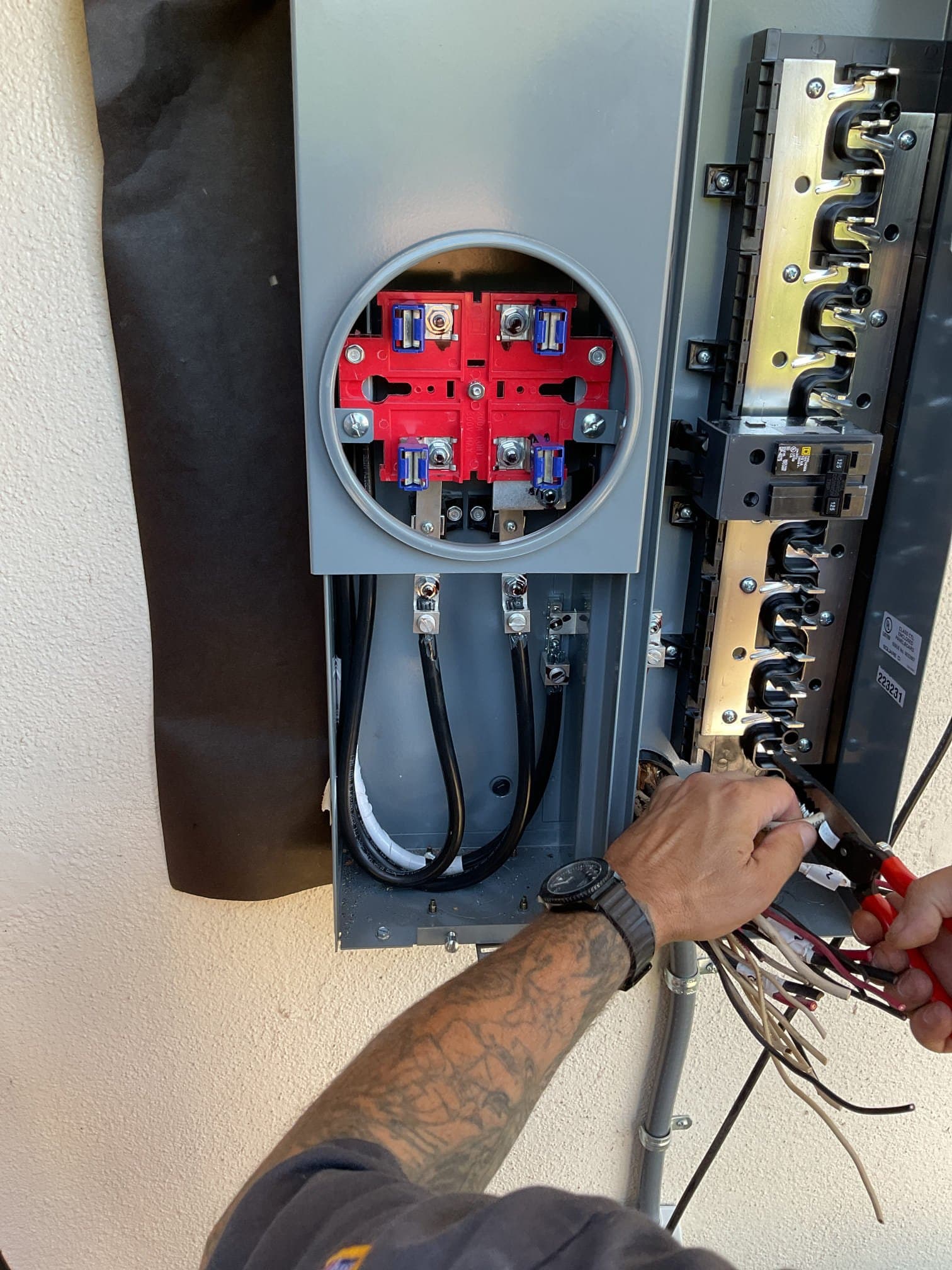
If your main breaker trips repeatedly, lights dim when the AC starts, or cover plates feel warm, your system is probably maxed out. A licensed electrician will confirm with a load calculation and an inspection of your service entrance, grounding, and meter socket. Sometimes you need a full panel upgrade. Sometimes load management or a subpanel does the trick.

Frequent Trips, Flickering Lights, and Other Capacity Clues

Watch out for:

  • Main breaker trips when the AC and dryer run together
  • Breakers tripping on the same circuit week after week
  • Flickering lights or lights dimming when a motor starts
  • Warm or discolored outlets, switches, or breaker panel covers
  • Buzzing or crackling sounds from the panel
  • Relying on power strips and extension cords every day

One tripped breaker after plugging in a space heater is normal—that's the breaker working. But if trips become a pattern, you probably have a capacity or wiring problem.

Treat burning smells, scorch marks, sparks, or any risk of electrical shock as urgent. Turn off what you can, keep everyone away from the panel, and call a professional electrician right away. Electrical safety isn't something to wait on.

What a Licensed Electrician Checks Before Recommending an Upgrade

A good electrician won't quote a panel upgrade from a photo. Expect them to check:

  1. Load calculation using your square footage, appliances, and HVAC equipment
  2. Main breaker and panel labels to confirm your real service rating
  3. Service entrance conductors and the meter socket for size and condition
  4. Grounding and bonding, including the ground rod and water pipe bond
  5. Branch circuit condition—looking for aluminum wiring, double-tapped breakers, or missing GFCI and AFCI protection
  6. Utility service line type and whether it's overhead or underground

You can prep by photographing the outside of the panel and the label inside the door, listing your major appliances, and noting when trips happen. Leave the cover on.

When Load Management or a Subpanel Makes Sense

Not every problem needs 200 amps. If your load calculation lands just over the limit, a smart load management device can let an EV charger share a circuit with the dryer by never running both at full power at once. Some EV chargers let you dial down the amperage, too.

A subpanel helps when you need more breaker spaces and your total demand is still low. When both space and capacity are tight, a full service upgrade with a new service disconnect and properly sized service entrance solves the problem for good.

Costs, Permits, and Making the Final Choice

A basic panel swap costs less, but if you need utility coordination, a new meter socket, a longer service line, trenching, or a mast move, the total goes up. Both California and Texas require a permit and inspection for a service upgrade, and the utility must disconnect and reconnect your power.

What Can Affect the Cost of a 100-to-200-Amp Upgrade

You won’t find a single price tag. Recent 2026 guides put a 100-amp to 200-amp panel upgrade somewhere between $1,800 and $4,500 for the panel itself. If you need utility-side work, expect $3,000 to $6,000. Treat these as ballpark numbers—your home and city will decide the real cost.

Here’s what usually bumps up the price:

  • Panel location. Outdoor meter-mains go faster than interior panels, especially if the feed is long.
  • Meter socket and service entrance. Swapping in new conductors or a socket means more labor and parts.
  • Overhead vs. underground service line. Trenching eats up more budget than just replacing a mast.
  • Grounding upgrades. Older homes often need a new ground rod and water pipe bond.
  • Code updates. AFCI or GFCI breakers, surge protectors, and proper labeling are now required.
  • Drywall, stucco, and paint repair after the job.
  • Utility and permit fees.

Check out a detailed breakdown of permits, utility work, and panel scope before comparing bids. Low quotes often skip the utility side.

Permits, Inspections, and Utility Coordination

Upgrading your service always requires a permit in California and Texas. The electrician pulls the permit with your city or county, then sets up the final inspection.

The utility sets the rest of the schedule. In Sacramento, that’s SMUD or PG&E. Around Austin, it might be Austin Energy, Pedernales Electric Cooperative, or Oncor. The utility pulls the meter, and once the inspector signs off, they re-energize and seal it. That handoff—more than the wiring—usually sets your project timeline. Expect the power to be out for a chunk of the day.

Ask your electrician who’s handling the permit, who deals with the utility, and how long you’ll be without power. Get those details in writing.

A Homeowner Checklist Before Calling an Electrician

Pull these together and you’ll get a faster, more accurate estimate:

  • Photos of your panel door label and the main breaker rating
  • Your home’s square footage and year built
  • A list of big appliances, with notes on gas or electric
  • Any planned additions: EV charger, heat pump, hot tub, ADU, workshop
  • Notes on which breakers trip and when
  • Whether your service line is overhead or underground
  • Recent utility bills if you want a usage comparison

Ask for a written load calculation with your quote. That’s the document that tells you if 100 amps will actually cut it or if you need 200.

Frequently Asked Questions

Quick answers to the most common questions about 100-amp and 200-amp electrical panels—how to identify your service, what upgrades cost, and more.

Is a 100-amp electrical service enough for a house?

Sometimes, yes. A 100-amp service can handle many homes under 1,800 square feet, especially with gas heat, a gas water heater, and one AC. If you add electric heat, an EV charger, or an induction range, you’ll probably run out of capacity—only about 80 amps are available for continuous load.

How can I tell whether my home has 100-amp or 200-amp service?

Check the main breaker at the top of your panel. The number stamped there (or on the label inside the panel door) will say 100, 125, 150, or 200. Don’t remove the panel cover—live wires sit above the main breaker, even if it’s off.

How much does it cost to upgrade from 100-amp to 200-amp service?

Most people pay $1,800 to $4,500 for the panel and service work. If you need a new meter socket, service line, or trenching, it’s usually $3,000 to $6,000 or more. Permit fees, grounding, and wall repair add on. Prices shift by region and panel setup, so get at least two written quotes.

Can a 200-amp panel be installed on a 100-amp service?

Yes, and it’s pretty common. A 200-amp panel with a 100-amp main breaker gives you extra spaces for circuits but doesn’t boost capacity. To get true 200-amp service, you’ll need to upgrade the main breaker, service entrance wires, meter socket, and utility feed together.

What wire size is required for 100-amp versus 200-amp service?

For most homes, 100 amps calls for #4 copper or #2 aluminum. For 200 amps, you’ll need 2/0 copper or 4/0 aluminum. The exact size depends on the wire type, temperature rating, and how far the run is. Your electrician will size everything to current code, and the inspector checks it.

Do I need 200-amp service for a garage, EV charger, or other high-power equipment?

Not always. For example, a Level 2 EV charger on a 50-amp circuit or a 50-amp hot tub can eat up half of a 100-amp service all by itself. The only way to know for sure is to run a load calculation. Sometimes, a load management device lets you add one big piece of equipment without upgrading your entire panel.

If you’re not sure what size panel your home really needs, give us a call or request a free estimate at aaaes.com. We’ll do the math and talk through your options, so you can make a smart decision.

Insight and news from our team

Contact Us

Electrical repairs for your family's peace of Mind