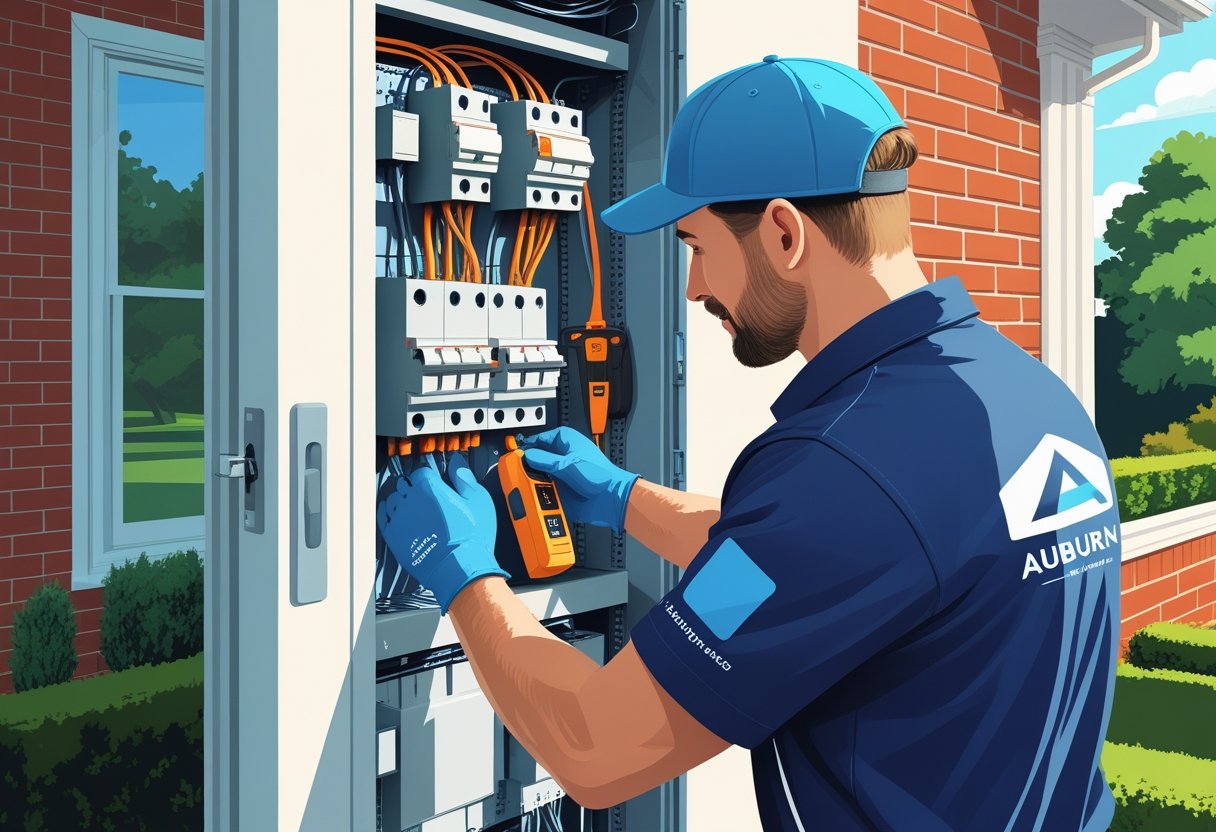
Living in Auburn, you expect your home’s power to just work—no drama, no surprises. But when breakers trip, outlets spark, or your panel starts buzzing, it’s time to call in a licensed electrician. Fast fixes keep your home safe and help you dodge bigger expenses down the line. Here’s what you need to know about urgent repairs, local codes, and what happens when a pro shows up.
You want clear answers, honest prices, and someone who can actually show up the same day. AAA Electrical Services sends same-day technicians, offers flat-rate quotes, and stocks their vans so most repairs wrap up in a single visit. Less stress, safer home.
Let’s run through common repairs, quick safety steps, and tips for picking a licensed Auburn electrician—so you can actually relax at home.
Understanding Electrical Repairs for Auburn Homeowners
You need straightforward info about common wiring problems, what causes them, and how to spot issues before they get worse. Here’s what typically goes wrong in Auburn homes and when you should call a pro.
Common Electrical Problems in Auburn Homes
Old or damaged wiring shows up as flickering lights, breakers that trip all the time, or outlets that feel weirdly warm. If your circuit breakers keep tripping or won’t reset, you might be dealing with overloaded circuits or failing breakers. Loose or ungrounded outlets? They can spark when you plug stuff in.
GFCI outlets in kitchens, baths, and garages fail more often than you’d think, and replacing them keeps you safe. Switches that buzz or flicker, dimmer switches that cut out, ceiling fans that stop working—these are all signs of wiring or switch issues. If you smell smoke or something burning near an outlet, shut off the power and get help, no hesitation.
Typical Causes of Electrical Issues
Wires and insulation break down as they age, and connections loosen up. Sometimes DIY work or sloppy past installations leave you with the wrong breakers, bad splices, or overloaded circuits that are basically fire risks. Moisture from leaks or outdoor exposure corrodes connections and causes shorts.
Rodents sometimes chew through insulation (as if you needed another reason to hate them). Weather—storms, heat, humidity—can wreck outdoor panels. And if you’ve added high-demand stuff like EV chargers or a new HVAC, your old panel might not keep up.
Recognizing Signs You Need Electrical Repairs
Keep an eye out for repeated breaker trips, sparking outlets, or anything that just doesn’t work. If your lights dim when big appliances run, you might have an overloaded circuit or need a panel upgrade. Burning smells, discolored or scorched outlets—these are urgent red flags. Shut off the power and call a licensed electrician, pronto.
Persistent buzzing, hot faceplates, or getting a shock when you touch a switch? Not normal. If your house has aluminum or old cloth-insulated wires, it’s time for an inspection. For quick, safety-focused repairs, pick a licensed team with stocked vans and flat-rate pricing like AAA Electrical Services.
Hiring a Licensed Auburn Electrician
Getting the right electrician keeps your family safe and solves problems without dragging things out or inflating the bill. Look for licensing, same-day service, clear pricing, and techs who show up ready to finish the job.
Benefits of Professional Electrical Services
Licensed electricians follow local codes and use the right parts, which lowers fire risk and keeps your insurance happy.
They find the root causes faster, too. Good techs bring meters, breakers, and replacement parts so you’re not left waiting days for a fix.
You’ll get clear pricing and a warranty. Flat-rate quotes, written estimates, and service guarantees help you know what’s coming before the work even starts.
How to Choose the Right Electrician
First, check licensing and insurance. Ask for a contractor number or state certificate and proof of liability coverage.
Find techs who offer same-day service and keep their vans stocked. That usually means faster repairs and fewer return trips.
Scan local reviews and ask your neighbors. Make sure techs have background checks, solid experience, and any special training you might need—like EV charger or panel work.
Questions to Ask Before Hiring
Ask if they’re licensed in California and carry both liability and workers’ comp insurance. Get the license number so you can check for yourself.
Find out how they price jobs—flat-rate, hourly, or mixed? Ask for a written estimate that spells out labor, parts, and permit fees.
See if they offer same-day service and if their vans are stocked for quick repairs. Ask about warranties, and if they’ll handle permits for bigger jobs.
AAA Electrical Services does safety-first work, brings stocked vans, and offers flat-rate, upfront pricing to help you decide.
Popular Electrical Repair Services in Auburn
Here are the repairs Auburn homeowners call for most. Expect clear pricing and techs who show up with the parts to finish the job on the spot.
Circuit Breaker Repairs
Circuit breakers keep your home safe from overloads. If breakers trip all the time, buzz, or feel hot, you might have a loose connection, a worn breaker, or an overloaded circuit. A licensed electrician will test breakers, tighten things up, and replace bad breakers or panels as needed.
Watch for frequent trips when you run multiple appliances, see lights dim, or smell something burning. These are serious and need fast repair. Most techs carry replacement breakers, so you don’t have to wait.
If your panel is old or can’t handle modern loads, ask about upgrades—especially if you’ve added things like EV chargers or a new HVAC.
Outlet and Switch Replacement
Bad outlets and switches can shock you, spark, or just not work. Usually, it’s worn contacts, loose wires, or outlets that aren’t grounded anymore. An electrician will test with a receptacle tester, swap out damaged parts, and fix wiring to meet code.
If you have kids, you’ll want tamper-resistant outlets. Kitchens and baths need GFCIs, and bedrooms/living areas should have AFCI protection. Want more convenience? Upgrade to outlets with USB ports or add circuits for big appliances.
Techs usually bring common parts, so repairs move fast. Honest pricing and clear options help you decide if it’s time to repair or upgrade.
Wiring Upgrades
Old or damaged wiring can be a hidden danger and limit your home’s power. Knob-and-tube, aluminum, or cloth-insulated wiring often needs to go. A pro will inspect, trace bad circuits, and suggest fixes or a full rewire if things look rough.
Upgrading lets you add new circuits for kitchens, EV chargers, or home additions. It also makes room for modern breakers and surge protection. Good electricians work to code and try to keep mess to a minimum.
Techs who treat their vans like a “warehouse on wheels” can get jobs done quicker. If you see frequent breaker trips, flickering lights, or warm outlets, make wiring upgrades a priority.
Safety Precautions for Homeowners
Your family’s safety matters most. Know the risks, take simple precautions, and don’t hesitate to call a pro if things feel off. Here’s what to do right away.
Electrical Safety Tips at Home
- Unplug appliances by the plug, not the cord—yanking cords can cause shocks.
- Replace frayed or cracked cords ASAP. Don’t just tape over them.
- Use GFCI outlets in kitchens, baths, garages, and outside. Hit the “test” button monthly.
- Don’t overload outlets or extension cords. Plug high-draw stuff (space heaters, microwaves) straight into the wall.
- Keep cords dry and out of walkways.
- Use the right bulb wattage. Check the fixture label before swapping bulbs.
- Got kids? Install tamper-resistant outlets or use covers.
Identifying Electrical Hazards
Pay attention to warning signs. Hot outlets, burning smells, flickering lights, or buzzing? Don’t ignore them.
- Check outlets and switches for heat, discoloration, or sparks—these mean loose connections or overloads.
- Track breaker trips. If one circuit trips a lot, it’s probably overloaded or a device is faulty.
- Look at visible wiring in attics, basements, and garages. Exposed wires, chewed insulation, or sketchy DIY splices are trouble.
- If lights dim when big appliances start, you might have weak wiring or a panel that’s too small.
- For older Auburn homes, two-prong outlets and knob-and-tube wiring are big red flags. Schedule an inspection if you spot them.
DIY vs. Professional Repairs
Some tasks are safe DIY, but most repairs need a licensed electrician.
- DIY: swapping light bulbs, changing outlet covers, testing GFCIs, resetting breakers.
- Leave to pros: panel upgrades, breaker replacement, wiring changes, installing EV chargers or generators, anything needing a permit.
- Licensed techs bring the right tools, parts, and safety gear. AAA Electrical Services offers same-day help, stocked vans, and certified pros for quick, safe repairs.
- When you hire, check that the electrician is licensed and insured, and get flat-rate pricing. Ask if they’ll clean up after—nobody likes a mess.
Preventative Maintenance for Auburn Residences
Regular checks and smart upgrades keep your home safe and help you avoid surprise repair bills. Focus on scheduled inspections, panel care, and updating old wiring and devices before they fail.
Routine Electrical Inspections
Book an inspection at least once a year, or whenever you buy or remodel a home. A tech will test breakers, outlets, GFCIs, and visible wiring to catch wear, loose connections, or code issues that could cause shocks or fires.
During an inspection, you’ll get:
- a look at the panel and wiring
- testing of outlets, switches, and GFCI/AFCI devices
- load checks on circuits that trip or power heavy appliances
Jot down weird sounds, flickering lights, or breaker trips before the visit. It helps the tech zero in on problems. Pick a licensed electrician with flat-rate pricing and a stocked van so repairs don’t drag out.
Upgrading Outdated Systems
Many Auburn homes need panel upgrades, knob-and-tube replacement, or new circuits for today’s power needs. Upgrades prevent overloads and keep things safe for EV chargers, solar, and new appliances.
Focus on:
- replacing rusty panels or those without modern breakers
- adding dedicated circuits for ovens, dryers, EV chargers
- installing GFCI/AFCI protection where code requires
Upgrades usually need permits and a short outage. Ask if they’ll keep the worksite clean, give upfront pricing, and offer warranties. A licensed, insured crew with a stocked van can finish faster and leave your place tidy.
Energy Efficiency Considerations
Upgrading wiring and fixtures can save money and boost safety. Look for devices that cut waste, support new appliances, and work with your current panel.
Installing Energy-Saving Devices
Start with smart thermostats, smart plugs, and programmable timers to cut wasted power from HVAC and always-on gadgets. A smart thermostat can lower heating and cooling bills by tweaking schedules—just make sure the wiring can handle it.
If you’re adding high-draw stuff like an EV charger or new HVAC, consider whole-home surge protection and new breakers. You might need a panel upgrade or subpanel to keep things safe. Ask about permits and save receipts for possible rebates or tax credits.
Stick with licensed techs who bring stocked vans for same-day work. You’ll avoid extra visits and the DIY headaches that can lead to bigger problems.
LED Lighting and Efficient Fixtures
Swap out those old incandescent or CFL bulbs for LED equivalents that match the brightness and color temperature you actually like. LEDs use way less power and last a lot longer, so you won’t be climbing ladders as often. Plus, your electric bill should drop.
If your fixtures are outdated, loose, or don’t work with dimmers, it’s time for an upgrade. Look for ENERGY STAR-rated options when you can. For recessed cans, use airtight, IC-rated LED trims—they help block drafts and stop energy from escaping through the ceiling.
Switching out a bunch of fixtures? Double-check that your existing circuits and dimmers work with LEDs. If things aren’t compatible, it’s smart to have a certified electrician take a look and upgrade switches or wiring as needed. That way, everything stays safe and works as it should.
Cost Factors for Electrical Repairs
Repair costs depend on how complicated the job is, what parts you need, and local permit or labor rules. Understanding these factors can help you budget for both quick fixes and bigger upgrades.
Estimating Repair Costs
Most electricians start with a basic fee just to come out and check your wiring, breakers, or outlets. In Auburn, labor rates usually make up the biggest chunk of the bill, and they’ll change based on the electrician’s experience or if you need emergency service.
Parts can be cheap or not-so-cheap. Swapping an outlet or switch usually doesn’t cost much, but adding a new breaker, surge protector, or GFCI can drive up the price. If your panel needs new parts or labeling, expect higher material costs.
Permits and inspection fees kick in for work that changes circuits or panels. If your place needs rewiring or code fixes, you’ll pay for extra time and labor. Always ask for a flat-rate, upfront price so you know what you’re getting into and can compare bids.
When to Consider Full System Upgrades
If you’re dealing with frequent breaker trips, flickering lights, or you still have an old 60-amp panel, it might be time for a panel upgrade. These issues usually mean your setup can’t handle modern stuff like EV chargers or bigger HVAC systems.
Upgrades mean new panels, sometimes rewiring, and definitely permits and inspections. All that adds to the total cost, especially with local code and permit fees in Auburn and nearby towns.
Think ahead. Planning for an EV charger, solar, or a remodel? Upgrading now could save you hassle and money later. A licensed pro will check your load capacity and suggest a 100- or 200-amp panel when it makes sense. Getting the job done right the first time keeps your family safe and helps you avoid repeat repairs.
Local Auburn Codes and Compliance
Local rules are there to keep your home safe and make sure all work is legal. Permits are required for a lot of jobs, and inspections make sure everything meets safety standards.
Understanding Electrical Permit Requirements
In Auburn, most electrical work needs a permit from the city or Placer County. Swapping outlets might not, but panel upgrades, new circuits, EV charger installs, and meter changes almost always do. Permits create an official record and require a licensed inspector to check the work.
Permits help you avoid fines and make things easier when you sell your home. Licensed electricians, like AAA Electrical Services, usually handle permits and inspections for you. Keep copies of everything with your home records—future you will thank you.
Ensuring Code Compliance
Code compliance just means following the California Electrical Code and any local Auburn or county updates. Inspectors check things like wire size, breaker ratings, grounding, AFCIs/GFCIs, and the right outlet placement in kitchens, bathrooms, and garages. Using the right materials and methods helps prevent shocks and fires.
Hire a state-certified, licensed electrician who actually knows the latest local codes. Ask for their license and insurance info before they start. A final inspection sign-off is proof the job passed and keeps your homeowner’s insurance valid.
Emergency Electrical Repairs in Auburn
Electrical emergencies are no joke—they can get dangerous fast. Act quickly to protect your family, cut power if you can do it safely, and call a 24/7 electrician serving Auburn and nearby areas.
What to Do During Electrical Emergencies
See sparks, smoke, or smell burning? Hear popping from an outlet? Get out of the room and keep others away. Don’t touch any appliances, switches, or exposed wires.
If it’s safe, shut off the main breaker to kill power to the house. If you can’t reach the panel safely, just get outside and call emergency services.
For a little smoke or a small outlet fire, you could use a Class C fire extinguisher—but only from a safe distance. Never use water on electrical fires. Jot down which rooms lost power, what sparked, and when it started. Those details help the electrician fix things faster.
Finding 24/7 Emergency Electricians
Look for a licensed, insured electrician who offers 24/7 service in Auburn, Roseville, Folsom, and the area. Prioritize companies with upfront, flat-rate pricing and background-checked techs.
AAA Electrical Services does same-day and emergency work, showing up with stocked vans so they can handle a lot of problems right away. When you call, mention your location, describe what’s happening, and ask how soon they can arrive.
Ask if the tech is state-certified and has parts for common fixes like breaker swaps or panel repairs. Confirm their safety practices, what they charge (hourly or flat rate), and any after-hours fees before they start.
Frequently Asked Questions
Here’s a quick rundown of common electrical issues in Auburn homes, tips on finding a reliable electrician, what repairs might cost, how repairs can boost efficiency, and the safety steps electricians should follow.
What are common electrical issues homeowners in Auburn might face?
You might notice flickering or dimming lights—usually a sign of loose connections or an overloaded circuit.
Outlets that spark, smell burnt, or feel warm need fast attention to avoid fire risk.
Frequent breaker trips could mean a faulty breaker, overloaded circuits, or a short.
Old two-prong outlets, damaged wiring, and outdated panels show up a lot in older Auburn homes.
How can one find a reputable electrician for home repairs in Auburn?
Go for a licensed and insured electrician with solid local references and clear pricing.
Check online reviews, or just ask your neighbors who they trust.
Ask if their techs are background-checked and certified, and if they stock common parts for quick fixes.
AAA Electrical Services is an option for fast, safety-focused work and upfront pricing.
What should I expect to pay for typical electrical repairs in a residential property?
Swapping out an outlet or switch is usually pretty affordable, while panel upgrades or breaker replacements cost more.
Jobs that need permits, extra labor, or pricey parts (like a new panel) will bump up the price.
Most companies offer flat-rate or upfront pricing so you know what you’re in for.
Always get a written estimate and ask about discounts—sometimes there’s $35 off your first service or a membership deal.
Can electrical repairs improve my home's energy efficiency?
Absolutely. Replacing old breakers, upgrading panels, and fixing faulty wiring can reduce energy loss.
Switching to LEDs and adding smart controls also cuts energy use.
Installing the right size EV charger or keeping your solar connections in shape helps future-proof your home.
Techs who keep parts stocked can often finish efficiency upgrades in just one visit.
What safety precautions should electricians follow while performing residential electrical repairs?
Electricians should shut off power at the breaker and double-check circuits are dead before touching anything.
They need to use insulated tools, wear the right protective gear, and stick to local code.
A clean work area matters—nobody wants a mess.
Before work starts, make sure the crew is licensed, insured, and follows safety-first practices.
How often should electrical systems be inspected in Auburn homes?
Most folks in Auburn should get a full electrical inspection every 3 to 5 years.
If your house is on the older side, or you’re dealing with flickering lights, weird smells, or breakers that keep tripping, don’t wait—get it checked out sooner.
After big renovations, panel changes, or any water damage, it’s just smart to schedule an inspection for peace of mind.