Electrical upgrades for older homes in Sacramento usually start with safety, then move to capacity, comfort, and whatever you might need down the road. If your house was built decades ago, chances are the wiring and panel aren’t exactly ready for today’s power-hungry gadgets and appliances.
The right electrical upgrades can help you avoid breaker trips, cut fire risks, support modern appliances, and keep your home up to code. That’s even more important in older Sacramento homes, where outdated panels and aging wiring are all too common.
You don’t have to replace everything at once. A licensed electrician can check your system, tell you what’s urgent, and lay out an upgrade plan that fits your home, your wallet, and your goals.
Signs Your Older Home Needs Attention Now
Older homes usually give you hints before something goes seriously wrong. When you notice repeated electrical issues, it’s smart to schedule an inspection before small problems turn into big ones.
Breaker Trips, Flickering Lights, and Other Red Flags
Breaker trips happening all the time? That’s a big clue your system’s struggling. Flickering lights, warm outlets, buzzing, and dead outlets can mean overloads or loose connections.
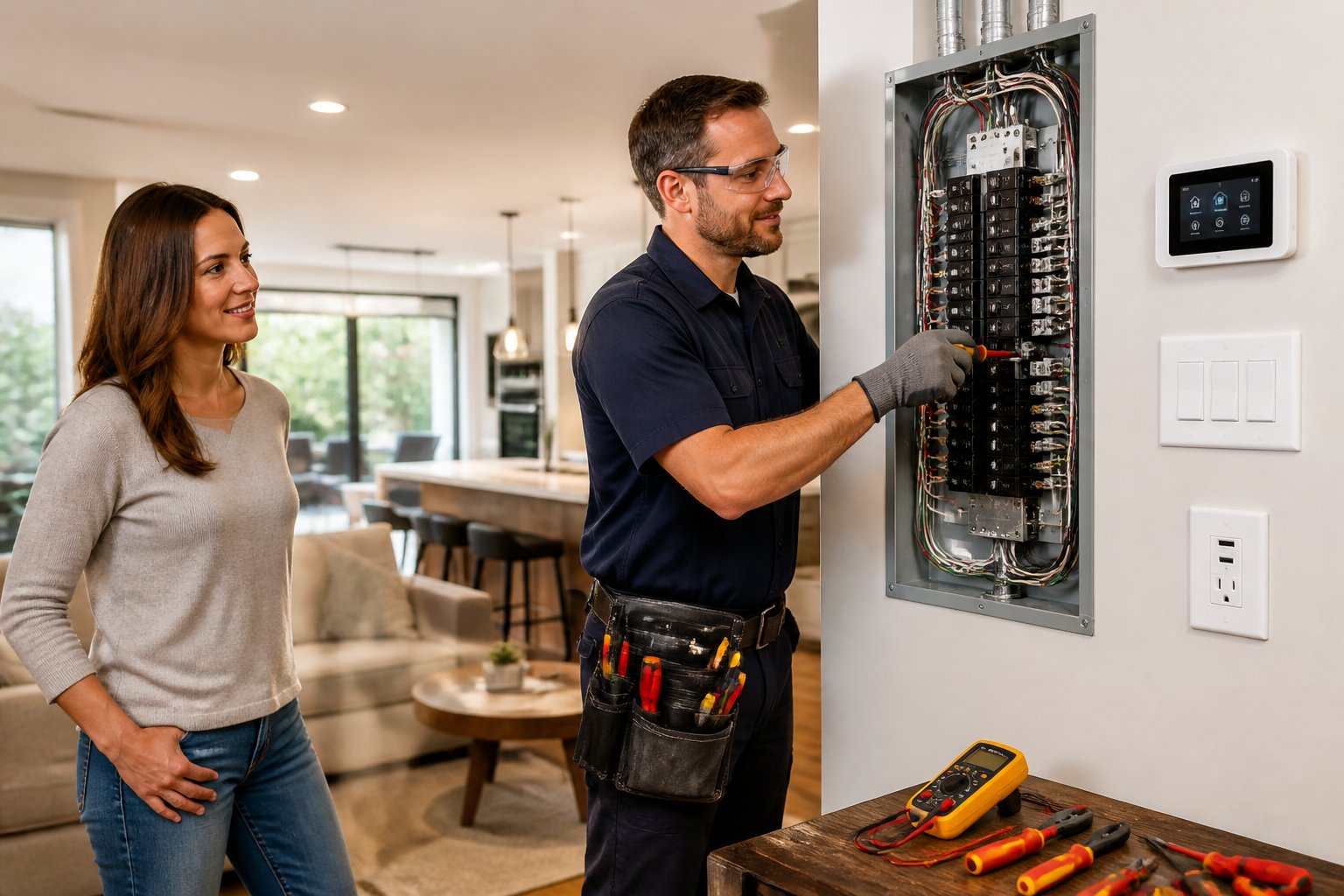
If you’re always resetting breakers, you might need a panel upgrade or at least a closer look at your circuits. In a lot of homes, a panel upgrade solves those annoying issues and bumps up your safety.
Outdated Panels, Fuse Boxes, and Limited Capacity
Plenty of older homes still have panels built for a time when people used way less power. Fuse boxes and old breaker panels may not keep up with modern kitchens, laundry, HVAC, or your home office setup.
You might notice lights dimming when appliances kick on, or circuits that can’t handle more devices. Upgrading the panel gives your home the breathing room it needs.
When Burning Smells or Heat Mean Urgent Service
A burning smell near the panel, hot switches, scorch marks, or heat from outlets? That’s urgent. These signs can mean loose wiring, damaged breakers, or overloaded connections.
If you spot any of that, turn off power to the area if you can do it safely and call for help ASAP. In these situations, you really want licensed professionals on the job.
Panel Capacity and Service Changes
Panel size sets the limit for what your home can safely run at the same time. Adding big appliances or planning a remodel? Your current setup might need more capacity to stay reliable and legal.
When a 200-Amp Panel Makes Sense
A 200-amp panel is a popular choice if your current service can’t keep up. It’s pretty common in older homes adding central air, an EV charger, a new kitchen, or more heavy-use appliances.
If your panel’s packed with no room for new circuits, it’s probably time for an upgrade. In Sacramento, this kind of work often comes with a full electrical service upgrade.
Adding Power for Remodels, HVAC, and Large Appliances
Remodels usually mean new lighting, outlets, dedicated appliance circuits, and safer wiring. HVAC and big appliances draw more power than your house was built to handle.
If you’re planning these upgrades, panel upgrades can prevent overloads and cut down on nuisance trips. It’s easier to add capacity before the drywall goes up than to fix it later.
What an Electrical Service Upgrade Typically Includes
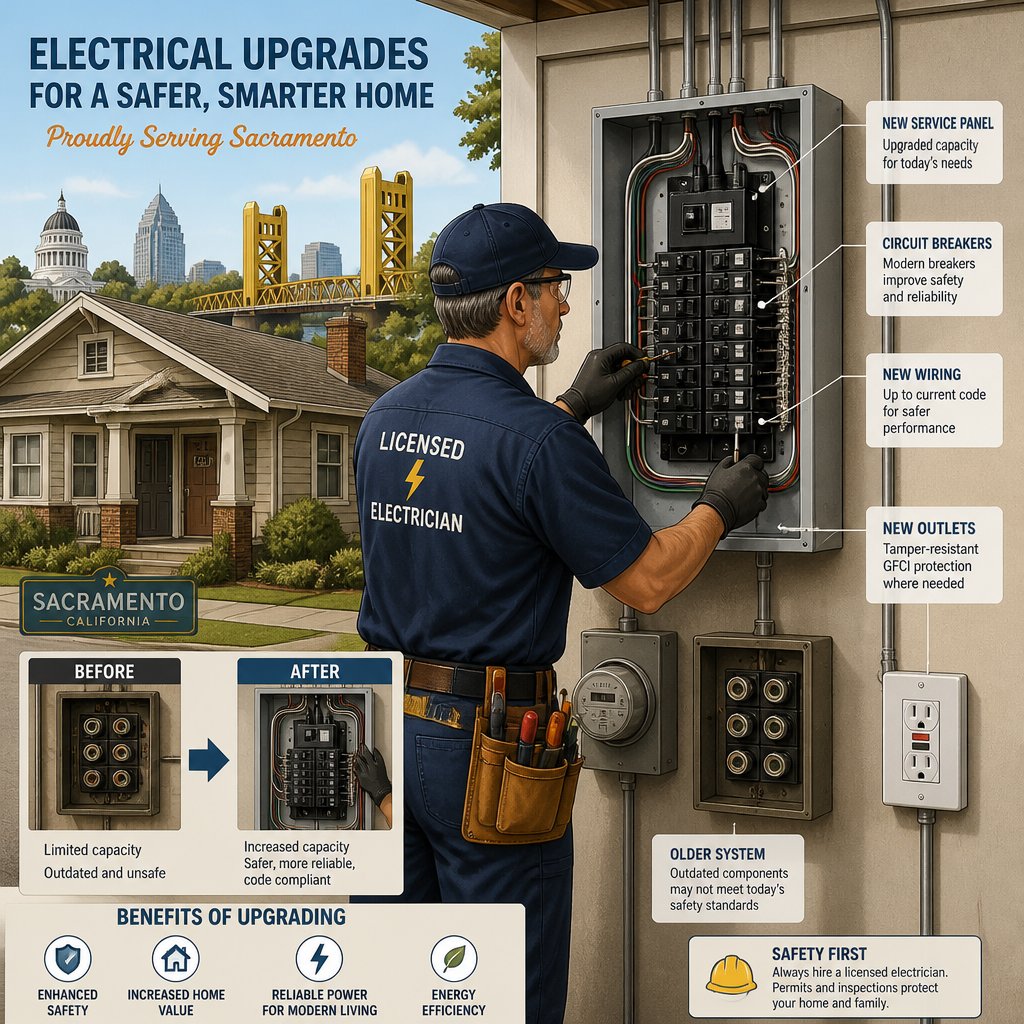
A typical upgrade might mean a new panel, new meter or service gear, updated grounding and bonding, and new breakers sized for your home’s needs. Your electrician will probably check the service wires and code compliance items too.
Usually, this work comes with permits and coordination with the utility. That keeps everything safe, legal, and ready for inspection.
Replacing Unsafe Wiring and Bringing Safety Up to Modern Standards
Old wiring can limp along for a while, but it might not meet today’s safety standards. If your home has ancient materials or patchwork repairs, wiring upgrades can really boost your peace of mind.
Why Knob-and-Tube Wiring Is a Concern
Knob-and-tube wiring pops up in very old homes. It was built for a different era—usually no ground wire, and it’s not cut out for today’s electronics.
It’s tough to inspect and a pain to work around during remodels. If you’ve got this type of wiring, a licensed electrician can help you decide if replacement’s the safest move.
Risks Linked to Aluminum Wiring
Some homes have aluminum wiring from certain decades, and it can cause problems if not handled right. Loose or bad connections might overheat and raise fire risk.
Electricians usually check outlets, switches, and junctions closely if aluminum’s present. Targeted repairs or replacement often end up as part of a bigger upgrade plan.
Grounding, Bonding, GFCI, and AFCI Improvements
Grounding and bonding steer electricity safely during a fault. GFCI outlets protect kitchens, bathrooms, garages, and outside spots; AFCI breakers help catch dangerous arcing.
These are key code updates for older homes. Even small upgrades like these can make a noticeable difference in safety, and you don’t have to rewire the whole house.
High-Value Upgrades That Improve Daily Living
Sometimes, upgrades aren’t about fixing problems—they just make life easier and cut down on wasted energy.
Whole-House Surge Protection for Electronics and Appliances
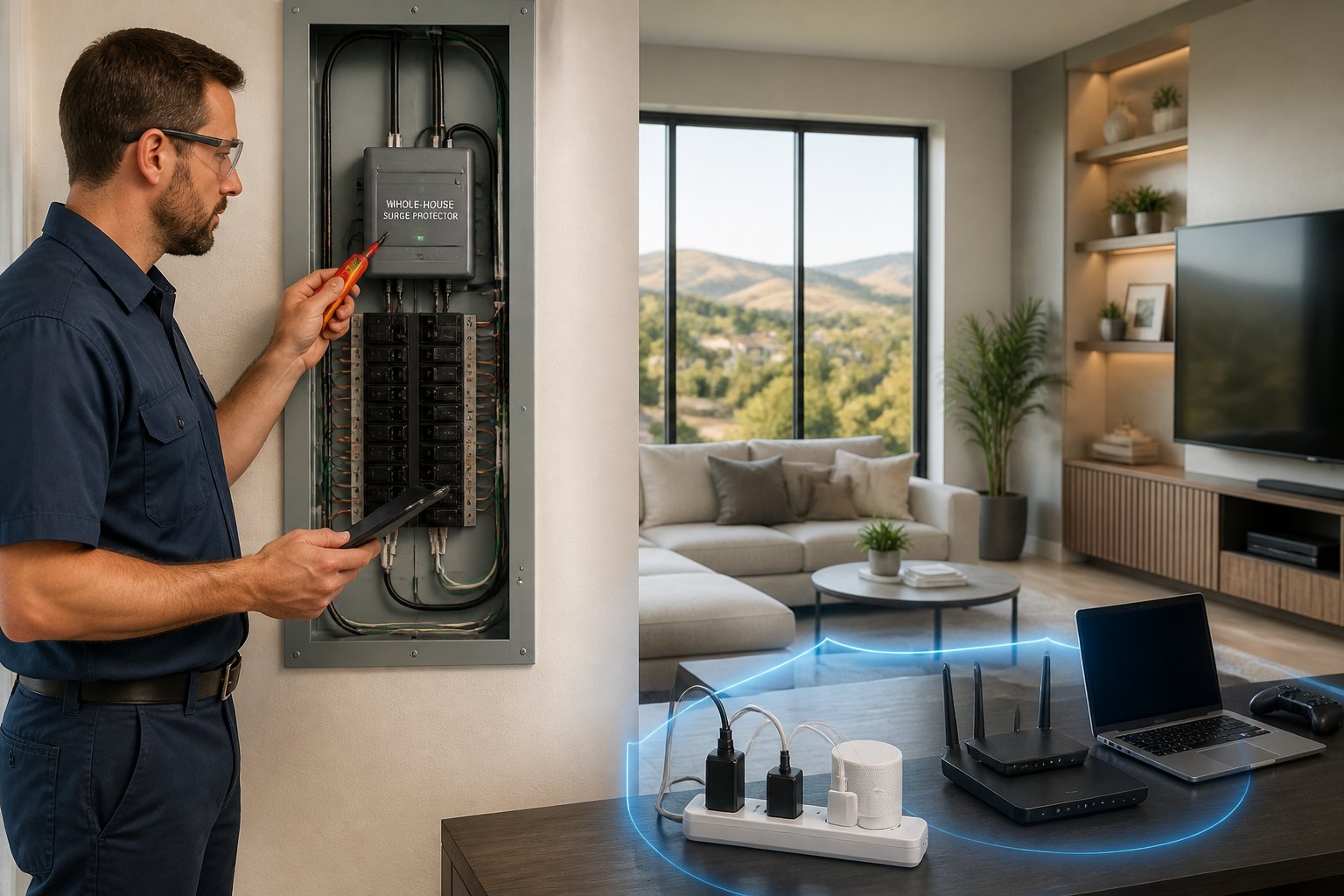
Whole-house surge protection shields your appliances, TVs, computers, and smart gear from voltage spikes. Handy, especially in older homes where electronics are scattered everywhere.
A surge protector at the panel is a practical upgrade if you’ve got expensive equipment. It’s simple, but it pays off.
LED Lighting, New Switches, and More Usable Circuits
LED lighting uses less energy and gives off less heat than old bulbs. Swapping out dated fixtures, switches, and worn outlets can make rooms look brighter, safer, and more modern.
Adding more circuits means fewer power strips and extension cords. That’s just more convenient and safer for everyone.
Smart Home Features for Comfort, Control, and Efficiency
Smart home features let you control lights, temperature, and security from your phone. In older homes, they bring modern convenience without a full remodel.
These upgrades can make daily routines smoother. Lots of folks like being able to adjust lights, fans, or thermostats from anywhere.
Future-Proofing for New Electrical Demand
Your electrical system should fit your life now and leave some wiggle room for what’s next. That’s especially true if you’re thinking about an EV, solar, batteries, or working from home.
Preparing for EV Charger Installation
Want to install an EV charger? Your home might need a bigger panel, a dedicated circuit, or a service upgrade. Many older houses just can’t support an EV charger and other big loads at once unless you make some changes.
A 200-amp panel often gives you more options, but the right size depends on your home’s real needs. Planning ahead saves you headaches (and money) later.
Planning Ahead for Solar, Batteries, and Home Offices
Solar, battery storage, and home offices all add electrical demand. Even if you’re not installing them yet, it makes sense to pick panel upgrades that leave room for growth.
Smart home features fit into this, too. They help with energy monitoring, better load control, and more efficient use of power.
Choosing Upgrades That Support Long-Term Resale Value
Buyers notice safe wiring, modern panels, and neat, well-labeled systems. These upgrades make an old home easier to sell and simpler for inspectors.
If you’re in Sacramento, future-ready upgrades can be a smart investment. AAA Electrical Services often sees homeowners pick upgrades that boost safety now and resale value later.
How to Plan the Work Without Surprises
A good electrical project starts with clarity. You want to know what’s urgent, what can wait, and roughly what the whole job will involve.
Inspections, Permits, and Code Compliance in Sacramento
Inspections help spot hidden problems before work starts. In Sacramento, permits are usually required for panel work, service changes, and bigger upgrades—and code compliance matters for both safety and resale.
A licensed electrician will explain which parts need approval. That way, the project keeps moving and you avoid last-minute inspection headaches.
How Electricians Prioritize Safety and Scope
A careful electrician tackles the biggest safety concerns first, then builds the rest of the plan around your budget and goals. Grounding, bonding, worn panels, unsafe wiring, and overloaded circuits usually top the list.
With same-day service from a team that treats your home like their own, you can often get a fast diagnosis. Stocked vans mean faster fixes, sometimes in just one visit.
Budgeting for Repairs Versus Full System Improvements
Some homes only need a few repairs. Others need a bigger panel upgrade or rewiring. The best plan depends on your panel’s condition, wiring age, and how much power you use.
Flat-rate, upfront pricing helps you weigh repairs against bigger improvements. Honest pricing—no games. That’s the kind of approach that keeps things under control.
Frequently Asked Questions
How much does an electrical service upgrade usually cost in Sacramento?
Costs depend on panel size, service gear, permits, and any extra repairs found along the way. A simple upgrade is less involved than a full service change with grounding, bonding, and new wiring.
Can I upgrade my electrical panel without rewiring the entire house?
Yes, plenty of homes get a panel upgrade without a full rewire. A licensed electrician will check your wiring first and let you know if the panel alone will do the trick.
When should an older home’s wiring be replaced versus repaired?
If the wiring is very old, damaged, or unsafe, replacement is usually the better call. Repairs might work for isolated issues, but widespread knob-and-tube or aluminum wiring problems often call for bigger upgrades.
What are the most common electrical safety issues found in older Sacramento homes?
You’ll often see breaker trips, flickering lights, old fuse boxes, missing grounding, worn outlets, and limited circuits. Some homes also have wiring that just doesn’t meet current code.
Are there any rebates or assistance programs available for electrical upgrades in Sacramento?
Programs change, and they might depend on the work—like energy-saving lighting, EV charger installation, or switching to electric appliances. Your electrician can help you ask the right questions before you start.
How do I know if my home needs a panel upgrade to support modern appliances and EV charging?
If you’re noticing breakers tripping a lot, or your lights flicker when you turn on the microwave or dryer, that’s a pretty good hint your panel might be maxed out. A packed panel with no extra slots is another red flag. Honestly, it’s worth having someone check things out—they can tell you if a 200-amp panel or even more juice makes sense for your place.