
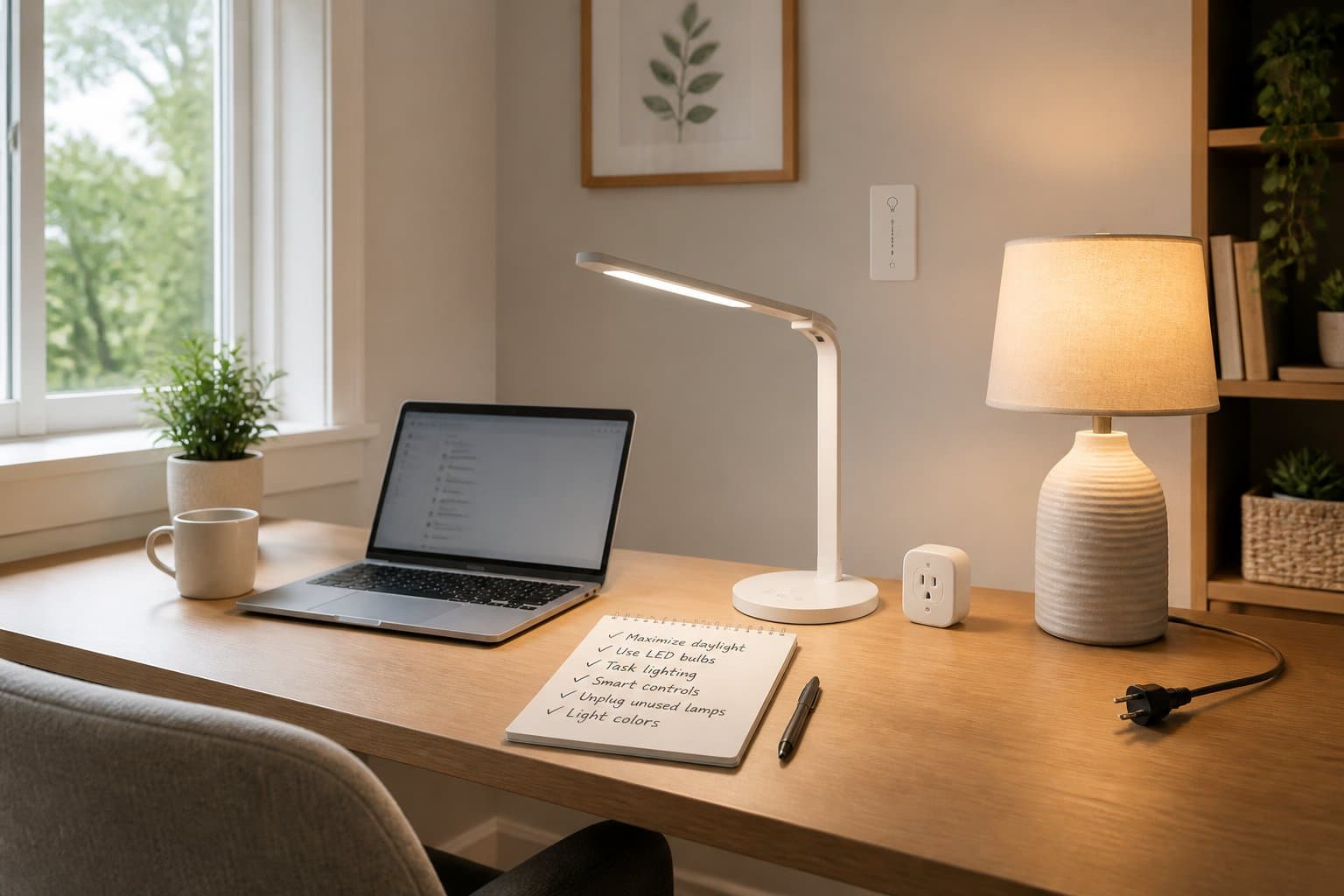
Working in a home office means lighting affects your comfort, focus, and energy use. Improving lighting efficiency in your home office helps reduce electricity bills while creating a safe and productive workspace. Even small tweaks—like swapping bulbs or updating fixtures—can really change the feel of your workspace.
Here at AAA Electrical Services, we get how much good lighting matters for your family’s safety and your daily grind. Whether you’re after better bulbs, newer wiring, or just want a pro to handle the install, we offer same-day service with upfront pricing and licensed, trustworthy techs. If you’re in Sacramento or nearby, you can lean on us for help that respects your home and your time.
Assessing Your Home Office Lighting
Before making changes, take a look at how much natural light your office gets, spot any areas that feel gloomy, and check the brightness around your workspace. This gives you a sense of where to start.
Evaluating Natural Light Sources
Check out your window placement and notice what kind of light comes in. Morning or afternoon sun really shifts the brightness in a room. Try to avoid heavy curtains or blinds blocking daylight during work hours.
Think about sliding your desk closer to a window to soak up more daylight. Natural light isn’t just easier on your energy bill—it’s easier on your eyes, too. Still, glare on your screen can be a pain, so tweak your setup as needed.
If your room’s on the dim side, you’ll need to add good quality lighting to fill in those gaps.
Identifying Dark Spots
Walk around with all the lights on and see if any corners or desk spots look dim or shadowy. Dark areas can make you squint or just feel tired faster.
Check under shelves, behind furniture, or right on your work surface. Sometimes a small lamp or a better-placed ceiling light is all it takes. Jot down where you need extra light.
If it seems tricky, AAA Electrical Services can safely install fixtures to brighten those stubborn spots.
Measuring Light Levels
Grab a light meter app or a simple handheld meter and check brightness in different spots. For reading or computer work, you want about 300 to 500 lux.
Measure near your desk and anywhere you found dark spots. Not enough light? You’ll strain your eyes. Too much? You’ll get glare or maybe even a headache. Adjust bulbs or lamps until things feel balanced.
If you’re scratching your head about your setup, licensed electricians in Sacramento and nearby areas can swing by and offer advice or quick fixes.
Choosing the Right Light Fixtures
Picking the right fixtures really shapes how your home office feels and how much energy you burn. Look for options that save power, feel comfortable, and don’t flicker or buzz.
Selecting Energy-Efficient Bulbs
Energy-efficient bulbs help your wallet and the planet. Look for ENERGY STAR certified bulbs—they use less electricity than the old-school kind. LEDs are champs here, using up to 75% less energy.
Every so often, check your fixtures to make sure bulbs are working and give them a quick clean—dusty fixtures dim your light. Flickering or buzzing? Probably time to swap the bulb or maybe the whole fixture.
If you’re in the Sacramento area, AAA Electrical Services can help install fixtures safely, so you don’t have to worry.
Comparing LED and CFL Options
LED bulbs stick around way longer and sip less energy than CFLs (Compact Fluorescent Lamps). LEDs can last up to 25,000 hours; CFLs, about 8,000. That means you’ll change bulbs way less often.
LEDs pop on instantly—no waiting for them to warm up. CFLs sometimes flicker and take a second. Plus, LEDs don’t use mercury, so they’re safer. They work with dimmers and even in cold rooms, so you’ve got more flexibility.
Sure, LEDs cost a bit more upfront, but over time, they save you money and hassle. Seems like a smart trade-off.
Understanding Color Temperature
Color temperature really shapes how your workspace feels. It’s measured in Kelvins (K): lower numbers mean warm, yellowish light; higher numbers mean cool, bluish light.
For home offices, shoot for 3500K to 5000K. That’s bright enough to keep you alert but not glaring. Warm light (2700K–3000K) feels cozy but might be too soft for detail work.
If you want more control, try bulbs with adjustable color temperature. That way, you can shift from warm to cool depending on the task or time of day. Your eyes—and maybe your mood—will thank you.
Optimizing Lighting Placement
Lighting isn’t just about the bulbs—it’s about where you put them. Good placement cuts eye strain, saves energy, and makes your office more comfortable. Aim for bright desk lighting, gentle ambient light, and avoid glare or dark corners.
Desk Lighting Strategies
Your desk lamp should give clear, focused light without shadows or glare. Place it on the side opposite your writing hand, so you don’t cast shadows. Adjustable LED lamps are a win—they last and use less power.
Use bulbs around 4000K for a natural white light. Too warm or too blue, and you’ll get tired. Dimmable lights are handy for switching between tasks.
AAA Electrical Services can help install efficient desk lighting, keeping things safe and tailored to your space.
Ambient Light Positioning
Ambient light fills the room and balances out your desk lamp. Put ceiling or wall lights where they spread light softly, not blasting you in the eyes or leaving spots in shadow.
LED ceiling fixtures or recessed lights work well and don’t gobble up energy. Just make sure they’re not shining directly on your screen or into your eyes.
Layering ambient light with task lighting keeps your workspace bright but still comfortable.
Reducing Glare and Shadows
Glare and shadows make work harder on your eyes. To cut glare, don’t put lights or windows right in front of or behind your screen. Use blinds or curtains to manage sunlight.
Angle your lights from the side or above, not straight on. Go for frosted lamp covers or shades to soften the light.
If you want a pro touch, AAA Electrical Services offers expert advice and lighting upgrades in Sacramento and nearby, with same-day service and honest pricing.
Maximizing Natural Light Efficiency
Making the most of natural light can save energy and make your office brighter. Reflect more light around, control how much gets in, and arrange your furniture to catch the daylight. It’s surprising how much these tweaks help.
Using Reflective Surfaces
Reflective surfaces bounce daylight around your office. Paint walls in light colors—white or soft pastels work best. Mirrors are a simple trick; put one near a window to send light deeper into the room. Even a shiny desk or glass tabletop helps.
Try not to clutter up surfaces that catch sunlight. Keep them clean and clear so the light can do its thing. These little changes can boost your lighting and cut your electric bill.
Window Treatments for Light Control
Pick window treatments that let you manage how much light comes in. Blinds or shades with slats give you control throughout the day.
Light-colored curtains soften the sun but still let it through. If glare’s an issue, blackout curtains can help, especially in the morning or late afternoon.
Reflective or thermal curtains help with temperature, too—cooler in summer, warmer in winter. That’s a bonus for energy savings.
Arranging Furniture for Maximum Daylight
Where you put your desk and furniture matters for daylight. Ideally, set your desk near a window but angled to avoid sun on your screen. This cuts glare and keeps things bright.
Don’t block windows with tall furniture. If you’re tight on space, try open shelving or low-profile pieces to keep the light flowing.
Moving your setup closer to the window when you can really helps. It’s easier on your eyes and just makes the space feel better.
Need electrical upgrades? AAA Electrical Services does safety-first work with licensed pros in Sacramento and nearby. Their same-day service makes lighting fixes a breeze.
Implementing Smart Lighting Solutions
Smart lighting can save energy and make your office more comfortable. The right bulbs and a bit of automation can lower your bills and fit your routine.
Smart Bulbs and Dimmers
Smart bulbs let you tweak brightness and color from your phone or with your voice. No need to get up or mess with switches. It’s easy to avoid using more light than you need.
Dimmers help you use just the right amount of light. Less brightness means less power, and it’s easier on your eyes during long days. Some smart dimmers let you set schedules or control lights remotely.
Switching to LED smart bulbs and dimmers can trim your costs and boost comfort. If you want hassle-free installation, AAA Electrical Services offers expert service with licensed pros in Sacramento.
Automated Lighting Schedules
Automating your lights means they turn on and off with your schedule. Set your office lights to come on when you start work and shut off when you’re done. No more forgetting and wasting energy.
Many smart systems adjust brightness by time of day or sunlight. Sensors or timers make sure lights are only on when needed.
Setting up schedules is usually simple, but if you want it seamless and safe, AAA Electrical Services provides fast, same-day installs and treats your home with care. It’s just one less thing to worry about.
Frequently Asked Questions
Lighting really can make your home office safer, comfier, and easier to work in. The right fixtures, bulbs, and placement save energy and help you focus. Here are some practical answers to common questions.
What are some effective overhead lighting ideas for a home office?
LED ceiling lights are a solid pick—they use less energy and give bright, even light. Recessed lighting helps cut glare and keeps things looking tidy. A dimmable overhead fixture lets you change brightness as the day goes on.
Which type of lighting is best suited for a productive home office environment?
Natural light is always best when you can get it. For artificial lighting, go for daylight-balanced bulbs around 5000K. They help reduce eye strain and keep you alert. Mix overhead lights with desk lamps so you can control light where you need it.
How can I improve the lighting in my dark home office to enhance visibility?
Layer your lighting—add floor lamps and desk lamps to your ceiling lights. White walls or light-colored furniture reflect light and help brighten the space. You could also upgrade your fixtures with brighter bulbs or call AAA Electrical Services for safe, same-day upgrades.
What are some ways to create a cozy and inviting lighting setup in a home office?
Mix in warm white bulbs for a softer, more inviting vibe. Lamps with fabric shades or adjustable brightness add warmth without glare. Try small accent lights or LED strips behind your desk for a comfy mood that’s not too harsh.
Can you suggest some indirect lighting techniques for a home office?
Put lights behind monitors or under shelves to ease eye strain and cut shadows. Wall sconces that shine upward give a soft glow. Indirect lighting adds depth and keeps things gentle on the eyes, while still giving you the visibility you need.
What are the latest trends in home office lighting design?
You can now tweak brightness and color right from your phone, thanks to smart lighting systems—pretty handy if you ask me. LEDs with energy-saving features and flexible settings are kind of the norm these days. Minimalist fixtures? They're everywhere, blending into modern décor so your office doesn't look cluttered. If you want to upgrade, AAA Electrical Services can sort you out with same-day installation, keeping things both safe and looking sharp.