Pets can turn ordinary household cords, outlets, and appliances into electrical hazards in no time. Curious chewing, pawing, digging behind furniture, or even a water bowl too close to a power source—suddenly you’re facing shock risks, burns, or fire concerns.
If you’re trying to boost electrical safety in a home with pets, you’ll want a mix of pet-proofing, smart cord management, safer outlets, and regular inspection. Little tweaks can really add up, especially when dogs, cats, or other pets hang out near chargers, lamps, entertainment centers, or laundry machines.
Key Takeaways
- Keep cords, outlets, and wiring out of reach.
- Add outlet protection in high-use areas.
- Build habits that cut pet access to electrical risks.
Secure Cords And Wires First
Loose cords are magnets for pets. They spot them right away and can chew them up fast. Check cords in every room, but focus on places where your pets sleep, play, or wander the most.
Hide Low-Hanging Chargers And Appliance Cables
Phone chargers, lamp cords, and appliance cables dangling near the floor are easy targets for chewing or tugging. Tuck cords behind furniture, tighten up any slack, and unplug chargers when you’re not using them. Cord clips can keep things tidy and make it less likely your pet will yank something loose.
Use Cord Covers And Cord Protectors
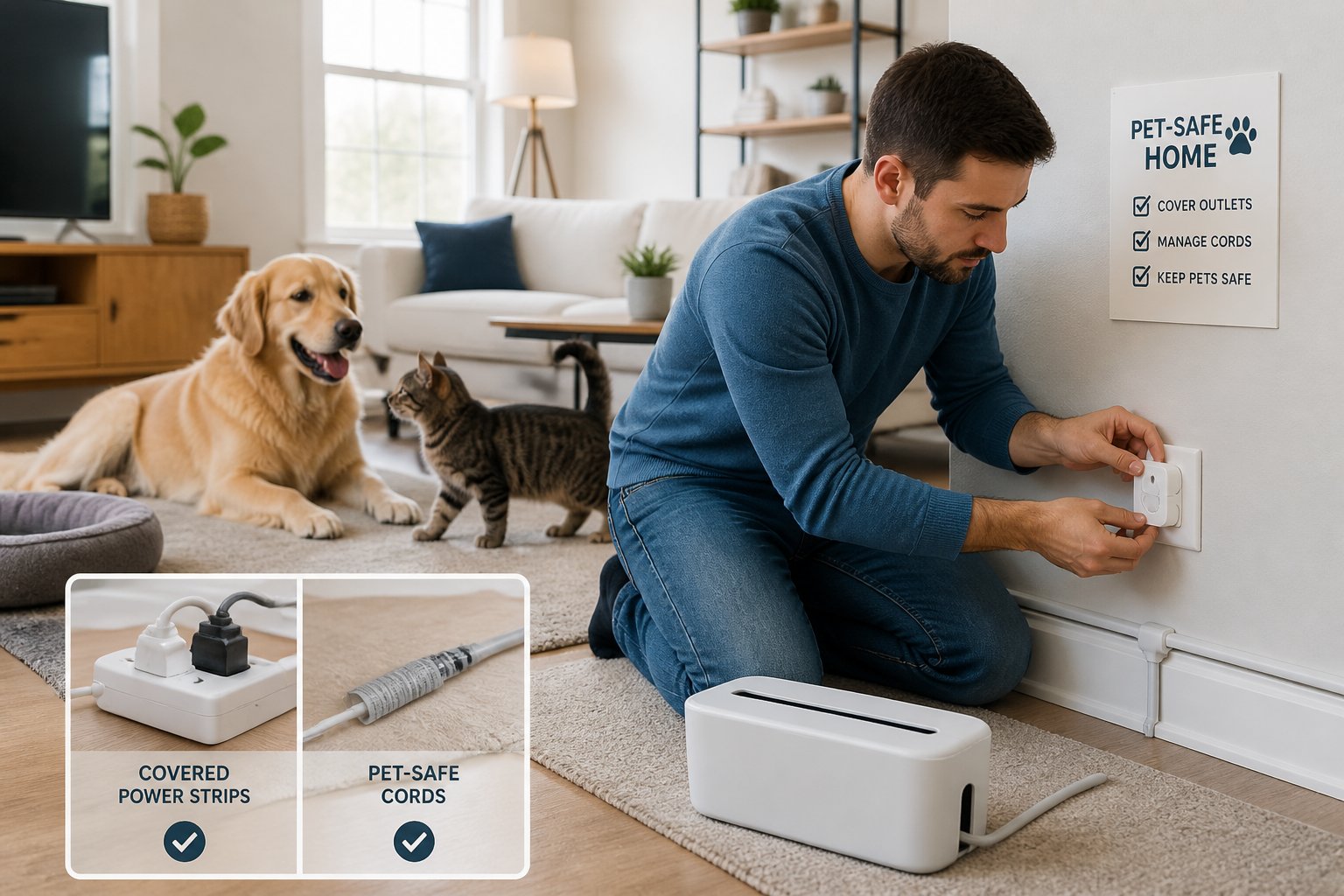
Cord covers and protectors put a physical barrier between pets and wires. They’re handy along baseboards, next to desks, and around media centers where exposed cords are tough to avoid. Go for sturdy covers that actually fit the cord. Don’t run wires under rugs—that just invites heat and friction.
Set Up Better Cord Management In Pet Areas
Good cord management makes pet-proofing work better in rooms your animals love. Use cable sleeves, cord clips, and clever furniture placement to keep wires bundled and off the floor. In open living spaces or busy home offices, a little extra organization protects both pets and your stuff.
What To Do About Frayed Cords And Exposed Wiring
Check cords for bite marks, cracking, bent plugs, or warm spots. When you find frayed cords or exposed wiring, get rid of them right away—they can shock, spark, or burn. If the wire’s exposed, stop using the device and fix or replace it before plugging it back in.
Make Outlets And Power Access Safer
Outlets are basically invitations for pets, especially those low on the wall or surrounded by loose plugs. Adding physical protection and safer outlet hardware gives you a strong defense without changing your whole routine.
When Outlet Covers Make Sense
Outlet covers are simple for rooms where pets get close to the walls—think nurseries, playrooms, family rooms. They block paws and noses from open sockets, especially when outlets aren’t in use. For active pets, outlet covers are a solid first step while you work on the rest.
Benefits Of Tamper-Resistant Outlets
Tamper-resistant outlets use internal shutters to keep foreign objects out. They’re a more permanent safety upgrade than removable caps and make sense if you have curious pets or kids. If you’re updating old outlets, it’s a good time to ask about safety outlets that fit how we actually live now.
Where GFCI Outlets Add Protection
GFCI outlets shine in spots with moisture—kitchens, bathrooms, laundry rooms, garages, outdoors. They cut shock risk by shutting off power fast when something’s wrong. For pet homes, that protection matters near water bowls, sinks, washers, and outside plugs.
How To Use Surge Protectors More Safely Around Pets
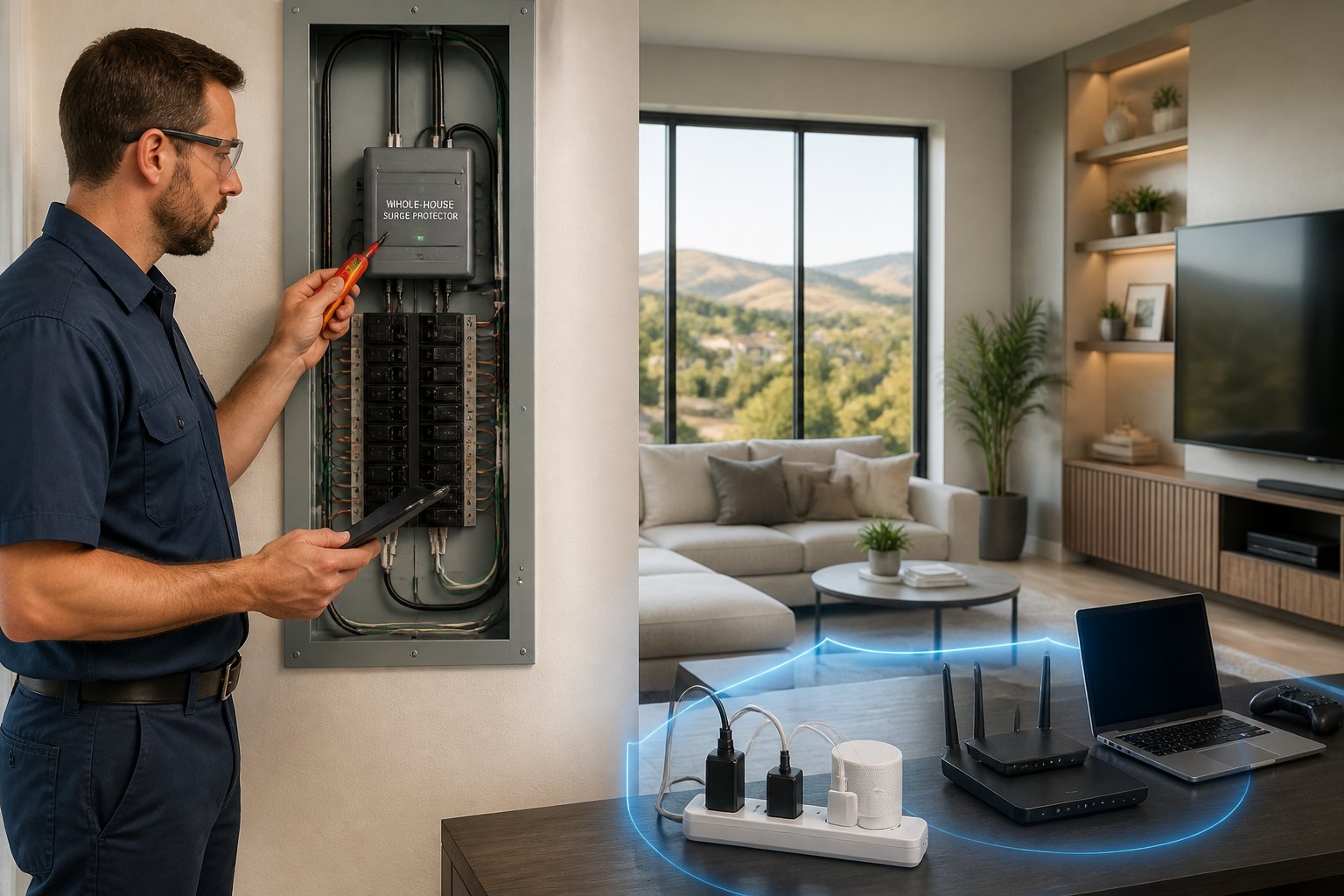
Surge protectors are great for electronics, but keep them where pets can’t chew or press against a crowded power strip. Try to elevate surge protectors, keep them away from pet beds, and out of busy floor areas. Pick units with strong surge protection, and don’t daisy-chain strips—too much clutter, too much risk.
Reduce Temptation And Block Access
Sometimes the best move is to make risky areas boring or unreachable. A few placement tweaks can keep your pet away from cords, devices, and corners that tempt them to chew or climb.
Pet-Safe Deterrents For Chewing Behavior
Deterrent sprays can help stop chewing on cords, furniture, and other favorite targets. Only use pet-safe products, and test them on a tiny spot first to make sure they won’t stain or bother your pet. Pair sprays with smarter cord placement—behavior changes work best when you remove the temptation, too.
Move Electronics And Small Appliances Out Of Reach
Keep small appliances, chargers, fans, and gaming gear where paws and teeth can’t reach. Raise devices onto shelves, desks, or wall mounts, and keep cords short and neat. In a busy house, just moving things out of reach can prevent a lot of headaches.
Block Off Unsafe Areas Behind Furniture And Equipment
Use furniture, gates, or barriers to block off unsafe spots behind TVs, desks, or big appliances. This really helps where cords, power strips, or wires pile up. If you block off unsafe areas, you cut the odds your pet gets stuck, chews a cable, or knocks something loose.
Check High-Risk Rooms And Hidden Trouble Spots
Some rooms need extra attention because they mix electricity, moisture, heat, or lots of devices. A room-by-room look can reveal problems you might miss during regular cleaning.
Living Rooms And Home Offices
Living rooms and home offices usually have the most cords, charging stations, and plugged-in electronics. Look behind sofas, desks, and entertainment centers for dust, loose plugs, and bite marks. Pets love to nap near warm gear, so cord placement and regular checks matter here.
Kitchens Bathrooms And Laundry Areas
Water and electricity don’t mix, so give kitchens, bathrooms, and laundry rooms extra attention. Keep cords away from sinks, tubs, and damp floors. Watch for devices near pet water bowls that might get splashed. These rooms sometimes hide electrical burns or heat damage around overloaded plugs, so inspect them closely.
Garages Basements And Outdoor Connections
Garages, basements, and outdoor plugs often have extension cords, work lights, chargers, and weather-beaten outlets. Make sure cords aren’t pinched, wet, or easy for pets to reach. If you use exterior gear in places like Folsom, Elk Grove, or Roseville, check covers, seals, and plugs after storms or heavy use.
Know When Repairs And Upgrades Are Needed
Some problems go beyond pet-proofing—think older wiring, overloaded circuits, or repeated equipment damage. If you spot warning signs, professional upgrades can boost both safety and reliability.
Signs Your Home Needs Professional Attention
If breakers trip often, outlets buzz, wall plates discolor, plugs feel warm, or cords keep getting damaged, don’t ignore it. If a pet chews through a cord or exposes wiring, it’s not just risky for them—it can mess up the circuit or nearby devices. A licensed electrician can tell if it’s a one-off or a bigger problem.
Electrical Upgrades That Improve Household Safety
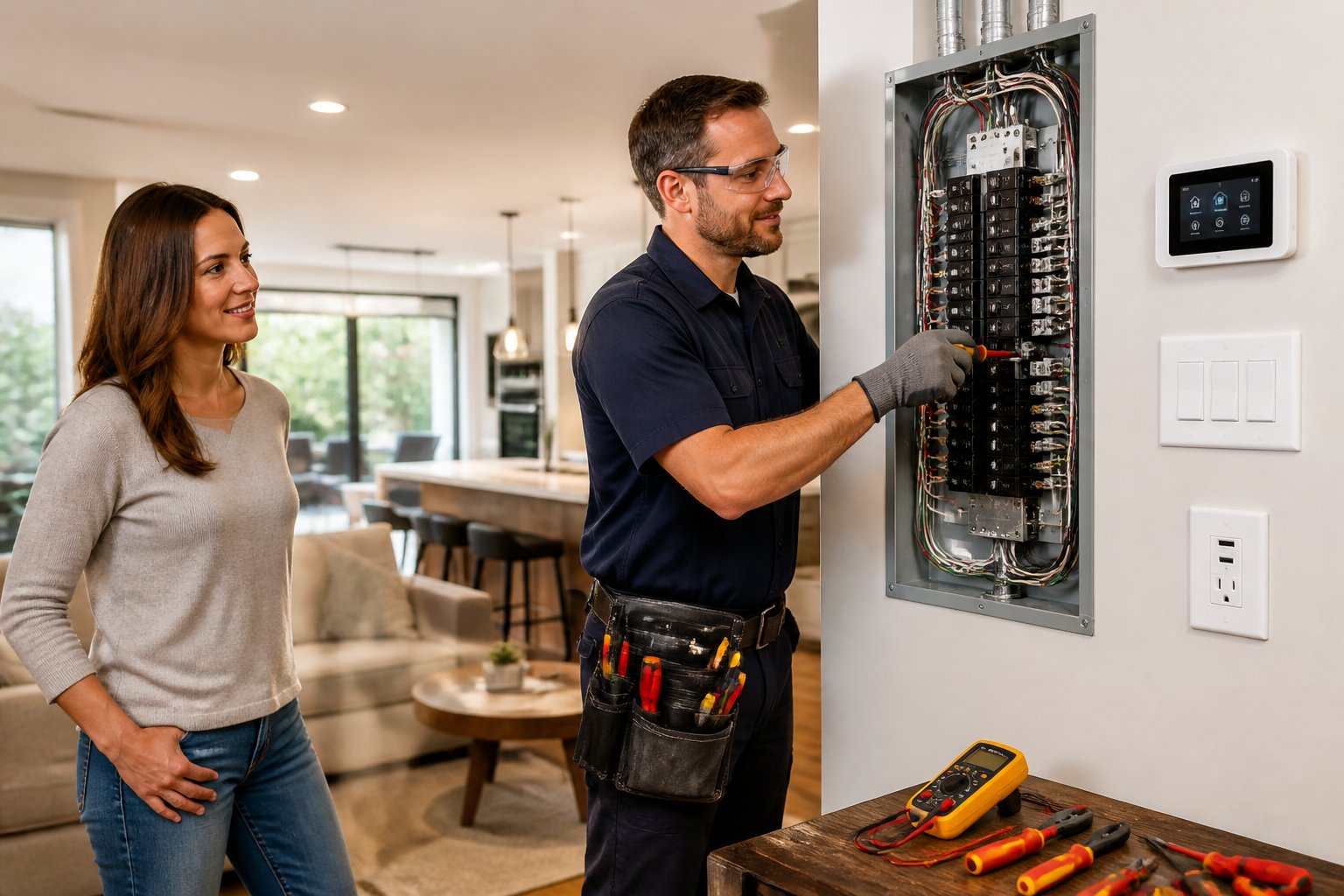
Upgrades might mean tamper-resistant outlets, GFCI protection, panel updates, extra circuits, or better surge protection. If you’re adding EV chargers, generators, or new appliances, plan for the extra load. These changes help future-proof your home and make daily life safer for everyone—including your pets.
When To Call A Licensed Electrician
Call a licensed electrician if you see scorch marks, repeated breaker trips, damaged outlets, or wiring that’s chewed or brittle. Sometimes same-day service is the way to go, especially if the issue affects a room your pet uses a lot. At AAA Electrical Services, clean, respectful techs and clear flat-rate pricing mean you get answers without extra hassle.
Build Safer Daily Habits For Pets And Family
Habits matter as much as upgrades. A few repeat steps can lower risk, protect your gear, and help you catch trouble before it turns serious.
Unplug Devices When They Are Not In Use
Unplugging unused devices cuts both heat and access, making things less tempting and less risky. Chargers, grooming tools, countertop appliances, and seasonal stuff should stay unplugged when not needed. Plus, it’s easier to spot damaged plugs and cords when you clean up.
Supervise Teething Pets And Heavy Chewers
Teething puppies and determined chewers need extra supervision around electrical stuff. Keep them away from loose cords, floor-level chargers, and unprotected outlets until you’re sure they’re safe. If a cord or outlet gets damaged, quick repairs with a fully stocked service truck can stop the problem from spreading.
Create A Routine For Ongoing Safety Checks
Pick a regular time to check cords, outlets, surge protectors, and device placement. Look for changes after cleaning, moving furniture, or adding new electronics. A quick routine can catch worn wiring, loose plugs, and other hazards before they become serious.
Frequently Asked Questions
What are the most common electrical hazards for pets inside a home?
Exposed cords, frayed wires, open outlets, and power strips within reach are the big ones. Pets also run into trouble with moisture in kitchens, bathrooms, laundry rooms, and outdoor areas.
How can I keep pets from chewing on power cords and charging cables?
Start by moving cords out of reach. Add cord covers, protectors, and clips where you need them. Pet-safe deterrent sprays help, especially when you also manage cords and block access behind furniture.
Which cord covers or cable management options are safest for homes with pets?
Sturdy cord covers, cable sleeves, and clip-based management tools usually do the trick—they create a barrier and cut down on loose slack. Choose products that fit snugly and stay attached to walls or furniture so pets can’t yank them free.
How can I pet-proof outlets, power strips, and surge protectors around the house?
Use outlet covers where they fit, and try tamper-resistant outlets for a longer-term fix. Keep power strips and surge protectors off the floor if you can, and don’t overload them with too many plugs.
What’s a safe way to handle pet static electricity indoors, especially in dry weather?
Keep humidity comfortable and make sure your pet’s bedding and play spaces aren’t too dry. Regular grooming and pet-safe moisturizers help cut static. Arranging cords and electronics properly also lowers the chance of a startled pet jumping into something dangerous.
How do I know if an electrical device or outlet has been damaged by a pet and needs attention?
Check for bite marks, exposed copper, cracked insulation, scorch marks, or even a buzzing noise. Sometimes the outlet plate feels oddly warm, too. If you spot any of this, it’s best to stop using the device or outlet right away. Honestly, just call a licensed electrician to take a look—better safe than sorry.