Worried your home’s wiring could cause a problem down the road? A whole home electrical inspection in Granite Bay gives you a real look at your system’s health, uncovers hidden hazards, and highlights what needs repair or upgrading to keep your family safe. A full inspection checks wiring, outlets, breakers, panels, and major systems so you know exactly what’s safe and what needs attention.
You’ll see what inspectors check, common issues in older homes, and how upgrades like panel work or surge protection can help prevent outages or fire hazards. AAA Electrical Services handles electrical work with safety in mind, using licensed, background-checked techs. They offer same-day service and flat-rate pricing, so you get fixes fast and know what you’ll pay.
Understanding the inspection process and what it typically costs helps you plan—from small repairs to future-proofing with an EV charger or panel upgrade. Read on to find out what to expect, how to pick a qualified inspector in Granite Bay, and what steps to take after the report.
What Is a Whole Home Electrical Inspection?
A whole home electrical inspection covers every major electrical piece in your house. It checks wiring, the panel, outlets, switches, and safety systems so you know what works and what needs a closer look.
Definition and Scope
A whole home electrical inspection is a room-by-room exam of your home’s electrical system. The inspector tests outlets for proper grounding, checks visible wiring for damage or bad splices, and looks over the electrical panel and breakers for correct sizing and signs of overheating. They also check GFCI and AFCI protection in kitchens, bathrooms, garages, and bedrooms.
The inspection might include testing switches, smoke and carbon monoxide detectors, and visible appliance connections. Inspectors note code violations, safety hazards, and aging components to give you a clear repair list.
Purpose and Benefits
The main reason? Safety. Inspections find fire risks, shock hazards, and overloaded circuits before they become real trouble. You’ll also hear about hidden problems like aluminum wiring, bad neutral connections, or mismatched breakers that can cause failures.
Benefits include prioritized repairs, a written report for insurance or resale, and advice on upgrades like a panel replacement or adding AFCI/GFCI protection. Fixing things early can save you from expensive emergencies. For Granite Bay homeowners, this keeps your family safe and your home up to code.
Who Should Get an Inspection
If your home’s over 20 years old, or you see flickering lights, tripping breakers, or warm outlets, it’s probably time. New homeowners, buyers, and anyone planning big renovations or adding EV chargers or solar panels should get one.
Had some DIY electrical work? Smell something burning? Planning to add a generator or other high-demand gear? An inspection’s a smart move. AAA Electrical Services offers safety-focused inspections with same-day service and licensed techs, so you know exactly what’s going on.
Why Choose a Whole Home Electrical Inspection in Granite Bay?
A whole-home inspection spots wiring, panels, and devices that could cause shocks, outages, or fires. It also checks if your system meets local codes, handles Granite Bay’s weather, and is ready for stuff like EV chargers or home upgrades.
Local Requirements and Codes
Granite Bay follows California and Placer County electrical codes. Inspectors check your service panel, grounding, GFCIs, and smoke/carbon monoxide devices to meet those standards. That keeps your home safe—and sometimes, it’s required for permits or sales.
Licensed electricians document issues and tell you what needs permits. You’ll get a clear repair list and a timeline to bring things up to code. AAA Electrical Services sends out state-certified technicians who know these local rules.
Specific Granite Bay Electrical Concerns
Older Granite Bay homes sometimes have fused panels, knob-and-tube wiring, or aluminum branch circuits. Homes that have been updated in pieces can end up with mixed wiring, loose connections, or undersized breakers—all of which raise fire risk.
Expect the inspector to test breakers, outlet polarity, and check if you need surge protection. If you want to add an EV charger, solar, or a backup generator, they’ll look at load capacity and panel space. Same-day service and well-stocked vans mean many repairs can happen right away.
Climate and Environmental Considerations
Granite Bay’s hot summers and the occasional storm can be rough on electrical gear and outdoor outlets. Inspectors look for weather-damaged wiring, corroded connections, and outdoor fixtures that aren’t rated for the elements. Attic and garage wiring gets special attention since it can overheat in summer.
With wildfire risk in the area, inspectors pay close attention to surge protection and make sure there’s enough space around your meter and service equipment. Regular inspections help you avoid equipment failure from heat, moisture, or dust—and keep your family safer all year long.
Key Components Checked During an Electrical Inspection
Inspectors look for safety risks, code issues, and parts that need repair or an upgrade. The goal is to make your home safe and reliable while pointing out what needs fixing.
Electrical Panels and Breakers
Inspectors open the main panel to check breaker condition, labeling, and capacity. They look for rust, burn marks, loose wires, and breakers that trip often. Obsolete or undersized breakers? That’s a red flag and could mean you need a panel upgrade.
They test each breaker to make sure it trips properly and check bus bars and grounding. Good labeling matters so you can shut off the right circuit if you need to. If you have an old fuse box or a panel from the 1960s–1980s, inspectors usually recommend replacing it for safety and more capacity.
Wiring and Outlets
Inspectors examine visible wiring for fraying, bad splices, or questionable modifications. They check outlet condition, secure mounting, and correct wiring at each receptacle. GFCI outlets get tested in kitchens, bathrooms, garages, and outside for proper trip response.
They look for overloaded circuits and heat damage around outlets. If you use lots of high-draw appliances, the inspector might suggest dedicated circuits or upgraded wiring. Old cloth-insulated cable or aluminum wiring usually needs a closer look—or replacement.
Grounding Systems
A solid grounding system keeps stray current from shocking you or frying your devices. Inspectors check that the grounding electrode (rod or system) is present and firmly connected to the panel, and that bonding is solid on metal boxes, water pipes, and meter enclosures. Corrosion or loose clamps? That’s a problem.
They also make sure the neutral and ground are separated at subpanels and bonded properly at the main service. Weak or missing grounding can stop protective devices from working, so fixes might include tightening connections, swapping out corroded parts, or adding a proper grounding rod.
Surge Protection Devices
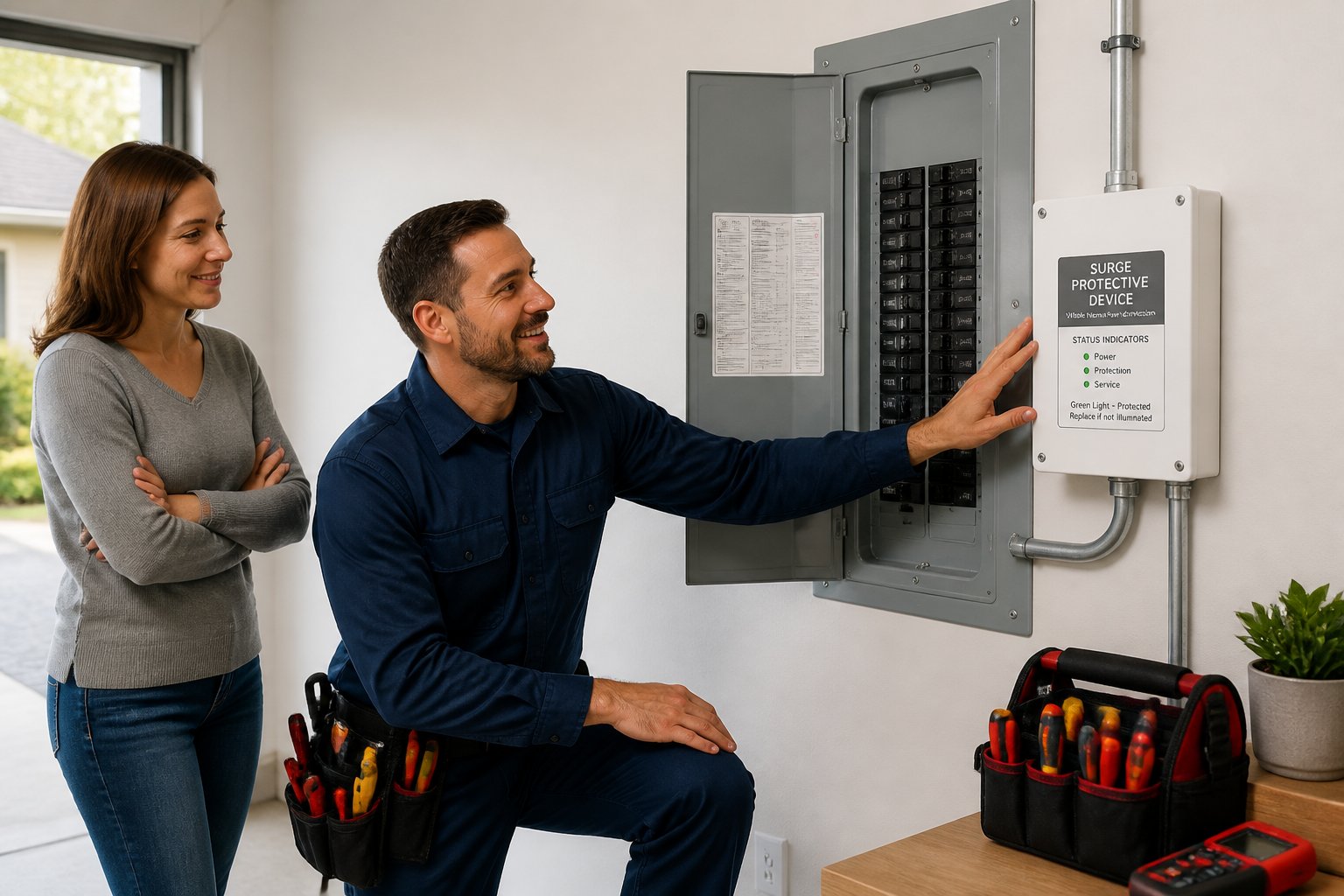
Inspectors check if you have whole-home surge protection or point-of-use protectors, and if they’re wired right. They check placement at the main panel and look for damage, loose connections, or outdated models that don’t meet modern standards. Good surge protection can save your electronics from voltage spikes.
They’ll check for proper bonding and that the protector’s ground path is short and direct. If you’ve got sensitive gear—home office, EV charger, solar inverter—they’ll often recommend a panel-mounted surge protector to cut your risk from lightning or utility surges.
AAA Electrical Services brings licensed pros and same-day service, and they treat your home with real care.
Safety Hazards Identified in Home Electrical Inspections
Inspections often turn up risks that could cause fire, shock, or outages. You’ll see problems in wiring, circuit loads, and how devices were installed.
Outdated Wiring
Old cloth-insulated, knob-and-tube, and aluminum wiring can overheat or just plain fail. These systems weren’t built for today’s appliances and higher electrical loads. You might notice flickering lights, warm outlets, or a breaker that trips for no obvious reason. All red flags.
Insulation breaks down over time, leaving bare wires or loose connections. Aluminum wiring can oxidize and make bad contacts at switches or outlets. Inspectors usually recommend targeted repairs, circuit replacements, or a full panel upgrade to meet code and cut fire risk.
If your home’s from before the 1970s, expect a thorough look. AAA Electrical Services will walk you through replacement options, costs, and timing so you can decide what fits your needs.
Overloaded Circuits
Overloading happens when too many devices pull power from the same circuit. Plug in a few space heaters, hair dryers, or a microwave, and suddenly breakers trip all the time. That kind of stress heats up breakers and wiring, wearing out insulation.
Inspectors check panel labeling, amperage ratings, and load balance. They test outlets and look for heat damage—melted plastic, discolored faceplates, that sort of thing. Solutions might be dedicated circuits for big appliances, upgraded breakers, or boosting panel capacity to match modern use.
It helps to note which rooms trip most and list your heavy-use gear before the inspection. The more info you give, the faster techs can suggest fixes—sometimes even same-day if they’ve got the parts on hand.
Improper Installations
Improper installations show up as loose connections, wrong-sized breakers, missing GFCI outlets, and DIY wiring that skips safety steps. These mistakes raise shock and fire risks. Inspectors look for missing grounding, open neutrals, and reversed outlet polarity.
Common issues: light fixtures not mounted right, outdoor outlets without weather covers, and hidden junction boxes. Every defect gets a clear repair priority—safety items like GFCIs and grounding come first.
Licensed techs will bring things up to code, using tested parts and proper mounting. You’ll get a straightforward repair plan, transparent pricing, and options for same-day fixes if there’s a real hazard.
Inspection Process: What Homeowners Can Expect
Here’s what you need to do before the inspector arrives, how long the visit usually takes, and how the inspector shares what they find. It’s practical and focused on safety and clear fixes.
Preparation Steps
Clear a path to your electrical panel and any attic or basement spots so the inspector can move around. Turn on all lights, test a few outlets and GFCI plugs, and label any circuits you already know (kitchen, dryer, garage).
Gather receipts, permits, or records of recent upgrades. If you’ve had work done in the last few years, these help the inspector check code compliance.
Take care of obvious hazards before the visit: swap out broken outlet covers, secure loose wires, and clear clutter near panels. If you’ve got an EV charger, solar inverter, or generator, make sure those areas are easy to reach and any manuals are handy. AAA Electrical Services techs work with a safety-first mindset and can help you prep if you want a pre-inspection visit.
Duration of the Inspection
Most full-home inspections run about one to two hours. It depends on your home’s size, how many circuits you have, and if there’s recent work that needs a closer look. A 1,500–2,500 sq ft house with standard wiring usually takes less time.
If the inspector needs to test GFCIs, AFCIs, or dig into the panel for connections and labeling, it might take a bit longer. Got solar, EV charging, or a backup generator? Plan for extra testing time. The inspector will let you know if they need to come back for more testing.
Walkthrough and Results
The inspector walks through each major area with you or someone you trust, pointing out safety issues and code concerns. They’ll test breakers, GFCI/AFCI protection, and visible wiring, then flag things like bad grounding, overloaded circuits, or outdated knob-and-tube or aluminum wiring.
You’ll get a written report with findings, photos of the main issues, and prioritized recommendations. The report usually separates urgent repairs (dangerous wiring, fire risks) from upgrades (panel labeling, extra outlets). If you want repairs, ask about same-day service and flat-rate pricing; AAA Electrical Services sends licensed techs with stocked vans for quick fixes and clear, upfront costs, making the process simple and safe.
Choosing a Qualified Electrical Inspector in Granite Bay
Look for an inspector who genuinely cares about safety, holds the right credentials, and has solid local reviews. Check what licenses they have, how long they’ve worked on homes like yours, and what people in your area say about their service.
Licensing and Certifications
Ask if the inspector has a California C-10 Electrical Contractor license or a state-certified electrical inspector credential. Get their license numbers and double-check them on the Contractors State License Board site.
Extra certifications—Nexstar training, manufacturer credentials for panels or EV chargers—show they’re keeping up with technical skills.
Make sure they carry general liability insurance and worker’s comp. That way, you’re covered if someone gets hurt or something’s damaged during the inspection. Always get copies of those certificates and hang onto them with your inspection report.
Experience and Specialization
Pick someone who’s worked on Granite Bay homes and nearby places like Folsom or Roseville. Local experience actually matters—inspectors know regional quirks, local codes, and how weather affects wiring.
Ask how many whole-home inspections they do each year and for examples of similar homes they’ve checked out. If your place is older or you’re thinking about a panel upgrade, EV charger, or solar wiring, make sure they’ve handled those before.
If you’ve got unique needs—like prepping for an EV charger, backup generator, or solar—ask if they’ve done hands-on work in those areas. Inspectors who also do repairs tend to catch things others miss.
Customer Reviews and Reputation
Check recent reviews on several sites. Don’t get hung up on one comment—look for patterns. Notice what people say about punctuality, clear reports, pricing, and whether the techs actually follow through. Bonus points if folks mention same-day service or leaving the house clean.
Ask for a couple of local references and actually call them. Ask how the inspector communicated, if they explained issues in plain English, and whether follow-up repairs went smoothly.
AAA Electrical Services is a local option with Nexstar-trained, background-checked techs, flat-rate pricing, and a reputation for same-day service and customer-first repairs.
After the Inspection: Next Steps for Granite Bay Homeowners
You’ll get a written report detailing what needs fixing, safety priorities, and suggested timelines. Use it to plan repairs, get quotes, and keep your place safe.
Interpreting the Electrical Inspection Report
Go through the report line by line, zeroing in on anything marked as "safety hazard" or "immediate." That usually means exposed wires, overloaded circuits, or bad breakers. Each item should tell you where the problem is, what’s causing it, and what to do next.
Look for code references or photos—codes tell you if a fix is urgent or can wait, photos help you show a contractor exactly what’s wrong.
If something’s confusing, just call the inspector and ask for a plain-language explanation. Keep the report with your other home records and jot down the date of any follow-up you schedule.
Addressing Recommended Repairs
Get written quotes from licensed electricians for each safety fix or major upgrade. Ask them to show their licenses, insurance, and spell out the scope of work.
Companies with flat-rate pricing and stocked vans often get repairs done in one visit. For safety hazards, don’t wait—schedule repairs within a few days. Non-urgent upgrades? Plan them around other projects, like a panel upgrade or generator install.
Save your receipts, permits, and before/after photos. You’ll need them for resale and to show the work met Granite Bay’s codes.
Ongoing Electrical Maintenance Tips
Test GFCI and AFCI outlets every few months and label any tripped breakers so you can spot patterns. Swap out damaged cords and don’t overload extension cords or multi-plug adapters.
Book a follow-up inspection or service every 3–5 years, or sooner if you add something big like an EV charger or solar panels. Regular checks help you catch hidden issues before they turn into real hazards.
A maintenance plan or membership might save you money on repeat visits. Electrical work done right by licensed pros keeps your family safe. If you need quick help in Granite Bay, AAA Electrical Services offers same-day service and stocked vans for fast fixes.
Cost of Whole Home Electrical Inspections in Granite Bay
Inspection costs depend on your home’s size, panel condition, and what follow-up work’s needed. You’re paying for the inspector’s time, their tools, and any special testing or paperwork.
Factors That Influence Pricing
Square footage and number of circuits matter most. A small 1,000 sq ft home with a basic panel is cheaper than a 3,000 sq ft home with lots of subpanels. Older homes usually cost more—inspectors have to check for knob-and-tube wiring, old breakers, and grounding issues.
Accessibility matters, too. Tight crawlspaces, tough attic access, or locked panels mean more labor. If they find code violations or unsafe wiring, expect extra fees for detailed reports, re-inspections, or permit paperwork.
Testing adds to the bill. Thermal imaging, GFCI/AFCI tests, and load calculations need special gear and usually bump up the total. Ask if the price includes a written report and permit coordination.
Comparing Local Inspection Services
Get written quotes from a few local inspectors and compare what’s included—not just the total price. Look for flat-rate pricing for a standard inspection and clear fees for extras like thermal scans or re-inspections.
Check their credentials and how fast they can get to you. You want a licensed, insured inspector who can show up same or next day. Ask if techs wear uniforms, leave your place clean, and carry the parts to fix minor stuff on the spot.
Bundled offers pop up sometimes. Some companies include a basic safety checklist; others charge extra for detailed code reviews. Make sure your quote covers a written report and photos.
Long-Term Value and Savings
A solid inspection can save you money by catching hazards before they cause fires or expensive damage. Fixing a loose connection or overloaded circuit now beats paying for big repairs later.
Think of inspections as part of your home’s regular upkeep. They help you plan for panel upgrades, EV charger wiring, or generator hookups without having to scramble. That way, you can spread out costs and avoid pricey emergency calls.
Go with a provider who puts family safety, clear pricing, and quick service first. AAA Electrical Services does same-day appointments, flat rates, and brings stocked vans—so you’re less likely to get hit with surprise costs.
Upgrading Your Electrical System After Inspection
Inspections often reveal weak spots—maybe your panel’s too small, wiring’s outdated, or surge protection’s missing. You’ll want clear options for panel work, new circuits, and adding smart controls to keep your home safe and ready for more gadgets.
Panel and Circuit Upgrades
If you’ve got a 100-amp panel, you might need to bump it up to 200 amps—especially if you’re adding an EV charger, new HVAC, or remodeling the kitchen. Upgrading means a new main breaker, bus bars, and better grounding. There’ll be permits and a short power shutdown while the swap happens.
Consider adding dedicated circuits for big appliances like an EV charger, electric range, dryer, or HVAC. That helps prevent breaker trips and hot wires. A good tech will check wire sizes, swap out old aluminum or cloth-insulated wiring if needed, and test grounding and GFCI/AFCI protection.
AAA Electrical Services can often do same-day fixes with stocked vans—so a lot gets done in one trip. You’ll get flat-rate pricing, permit help, and a satisfaction guarantee from licensed, background-checked techs.
Smart Home Integration Options
Smart panels and breakers let you keep tabs on your electrical load and control circuits from an app. You can schedule heavy loads like EV charging for off-peak hours and get alerts if something trips. Installing a subpanel near an EV charger or workshop keeps things tidy and can cut down on conduit.
Consider whole-home surge protection at the service entrance to shield your appliances and smart gear. Smart switches, dimmers, and outlets give you control over lighting and plug-in devices—no need to rewire the whole house. If you’re adding solar or a generator, ask about automatic transfer switches and load management.
Techs will map your circuits and suggest the simplest upgrades to match your goals. You’ll get clear pricing and timelines so you can plan around your budget.
Common Myths About Home Electrical Inspections
Some folks think inspections are just for new homes. Not true. You should get one after renovations, when buying, or if you notice flickering lights or tripped breakers. Regular checks help catch hidden problems early.
Worried an inspection always finds huge problems? That’s rare. More often, inspectors spot small stuff—loose outlets, worn wires—that’s easy to fix.
A lot of people believe DIY checks are enough. Honestly, a certified inspector uses tools and code knowledge most homeowners just don’t have. Trusting a pro keeps your family safer and avoids missed hazards.
Some think an inspection means you’ll be forced into expensive upgrades. Inspectors simply report what needs attention and flag safety priorities. You’ll see your options and prices before any work starts.
Another myth? Older homes can’t be safe. Actually, older wiring can be updated, and lots of homes just need focused repairs. Good techs offer practical, budget-friendly solutions.
People sometimes expect inspections to take all day. That’s not the norm. With experienced crews—like AAA Electrical Services—inspections are usually pretty efficient, and they’ll explain findings in regular language.
Are inspections optional? If you care about safety or resale value, not really. An inspection gives peace of mind and helps prevent fires, shocks, and surprise costs.
Frequently Asked Questions
Got questions about wiring, panels, outlets, or inspections? Here are some quick answers and steps to take if inspectors find issues, plus tips to get ready for a check.
What are some common electrical issues that inspectors discover in a home?
Inspectors often find outdated panels that can’t handle today’s loads.
They spot loose or damaged wires inside walls and find improper or ungrounded outlets.
You might see overloaded circuits, tripped breakers, and missing GFCI protection in kitchens or bathrooms.
Old knob-and-tube or aluminum wiring pops up in older homes, too.
Can you tell me how long an electrical home inspection usually takes?
Most whole-home electrical inspections run about 1 to 3 hours.
It depends on your home’s size, number of circuits, and how easy it is to get to panels and wiring.
If the inspector checks appliances, smoke detectors, and exterior wiring, it’ll take longer.
For smaller homes or quick follow-ups, it might be closer to an hour.
What's the first thing I should do if my home fails an electrical inspection?
If your home fails, ask for a written list of hazards and code violations.
Start with anything labeled as an immediate safety risk—exposed wires, faulty panels, that sort of thing.
Reach out to a licensed electrician for a repair estimate and a realistic timeline.
If you’re hiring local, look for licensed, insured pros who offer flat rates and same-day service.
Could you explain the difference between a standard home inspection and an electrical inspection?
A standard home inspection covers a lot—roof, plumbing, HVAC, and a basic look at electrical stuff.
It usually skips detailed circuit testing or load analysis.
An electrical inspection digs deeper—checking wiring, panels, breakers, grounding, and safety devices.
Inspectors test circuits, GFCIs, AFCIs, and may check voltage and load.
How do I prepare for an electrical inspection in my house?
Clear a path to your electrical panel, meter, and any subpanels.
Move boxes or furniture out of the way—especially if they block closets, basements, or attic panels.
Label breakers and switches if you can.
Turn on some lights and big appliances so the inspector can test circuits under load.
Are there any immediate red flags that I should look for in my home's electrical system?
Keep an eye out for discolored outlets, any weird burning smells, or that odd buzzing near outlets or the panel—those aren't normal.
If a faceplate feels warm to the touch or you see sparks when plugging something in, that's definitely a big red flag.
Breakers that trip all the time, lights that flicker for no clear reason, or GFCI outlets that just don't work—these all mean you should probably call a licensed electrician soon.
And if you notice exposed wiring or spot some questionable DIY work in your panel, don't wait around; those need attention right away.