Keeping a home gym or workshop safe and reliable really comes down to matching your electrical setup to what you actually use, separating heavy gear from regular outlets, and protecting damp or exposed spaces with proper devices. A solid setup means fewer nuisance trips, less fire risk, and steadier performance for workouts, tools, and any climate-control gadgets you run.
If your garage gym, basement gym, or home setup keeps growing, don’t ignore the electrical side. It really deserves as much thought as the flooring or equipment. Usually, you’ll want to start with capacity planning, then think about circuit layout, moisture protection, and getting a licensed electrician to check things out when something feels off. That’s how you keep things safer and avoid those annoying surprises in the middle of a workout or while using shop tools.
Key Takeaways
- Check your electrical panel before adding more gear.
- Keep heavy equipment off shared household circuits.
- Don’t ignore early warning signs—they protect your home and your stuff.
Start With Your Electrical Load And Panel Capacity
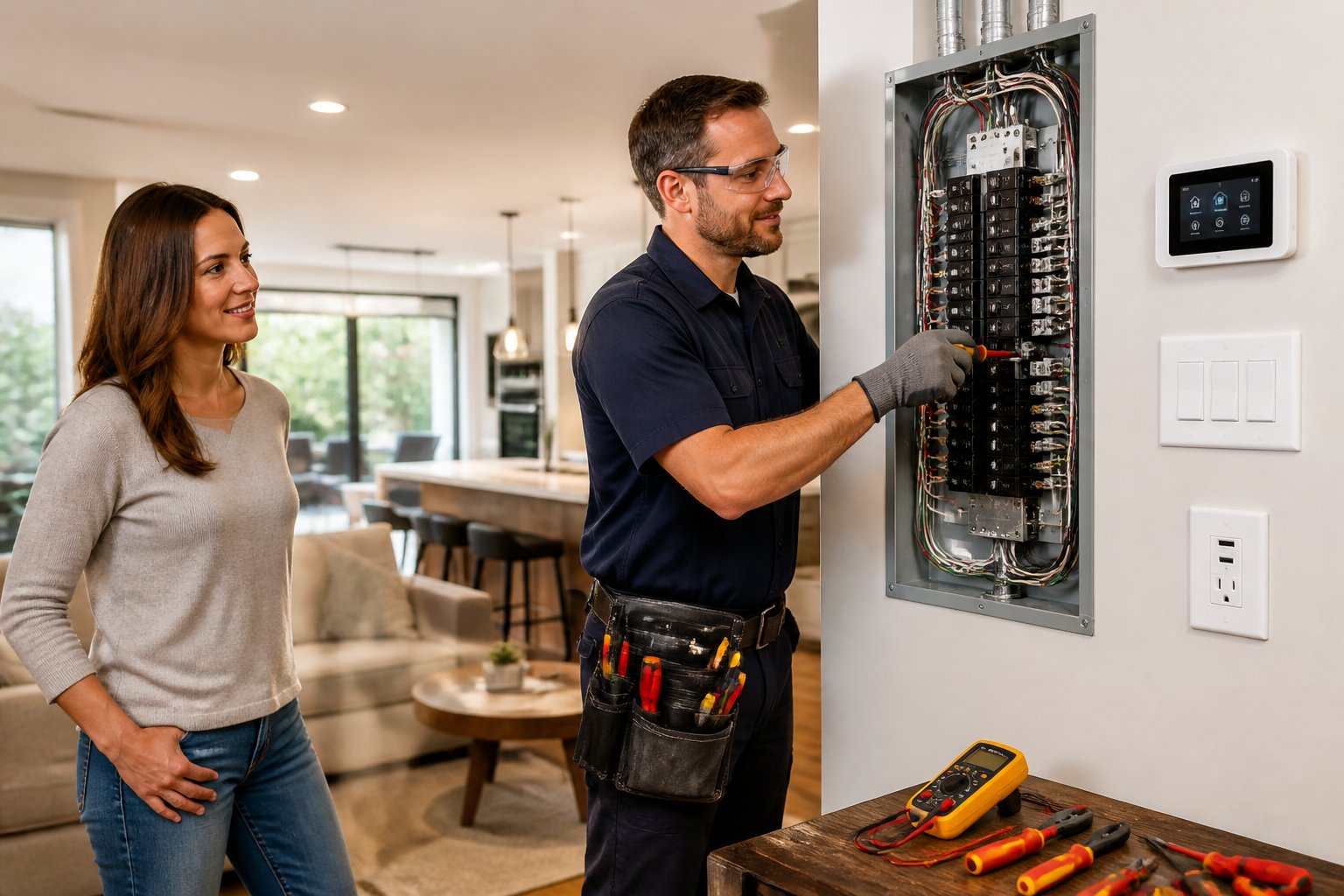
A safe home gym or workshop starts with knowing how much power you actually use. A licensed electrician can help you compare your equipment’s needs with your panel’s capacity, so you don’t accidentally overload things or push your system past its limits.
Check What Is Already On The Circuit
Take a look at what’s already plugged in around the room and even nearby spaces. Treadmills, fans, compressors, heaters, and chargers can all compete with the lighting or outlets you thought were separate—especially in older Sacramento homes and garages that got converted over time.
Understand Startup Load And Continuous Use
Some machines pull a lot more power when they first start up, then settle down. That initial surge can trip breakers even if the equipment seems fine on paper, so a circuit that passes a quick test might still fail during a full session.
Know When A Panel Upgrade Makes Sense
If you’re adding several machines, heaters, charging stations, or workshop gear, a panel upgrade might be the smarter move. Dedicated circuits give you more predictable performance, better safety, and leave room for future upgrades—like an EV charger or generator hookup.
Separate Heavy Equipment From General-Purpose Power
Heavy equipment shouldn’t share outlets with lamps, chargers, or appliances. When you split loads properly, your home gym gear runs more reliably and your electrical system stays cooler and less stressed—kind of like a well-planned crossfit gym, honestly.
When Gym Machines Need Their Own Circuit
Treadmills, rowing machines, cable towers, and other powered equipment usually need their own circuits. If something pulls a lot of power, a dedicated line helps prevent trips, reduces wear on wiring, and keeps the rest of the room available.
How Workshops And Heaters Compete For Power
Workshops can pull just as much power as training areas, especially if you use saws, dust collectors, air compressors, or space heaters. If your garage gym doubles as a shop, it’s smart to keep heat-producing gear on a different circuit than your workout machines.
Why Extension Cords Are A Bad Long-Term Fix
Extension cords might seem handy, but they usually add voltage drop, clutter, and a tripping hazard. They’re just a quick fix—not a real replacement for proper outlets, dedicated circuits, or a layout that fits how you actually use the space.
Build A Safer Layout For Strength Training Areas
A tidy strength area means fewer cable hazards and more open space around your rack and bench. Good planning helps you put outlets, lights, and accessories where they help your training—not where they get in the way.
Outlet Placement Around A Power Rack Or Bench Area
Think about outlet locations before you finalize a rack or bench setup. Keep outlets reachable for pull-up bars, benches, and accessories without forcing cords across your lifting path.
Protect Open Floor Space From Cord Hazards
Open floor space matters as much as your lifting platform. If you use home gym flooring or rubber mats, keep cords away from walkways and landing zones so you can move safely around plates, benches, and warm-up spots.
Plan Lighting Fans And Chargers Without Overcrowding Circuits
Lighting, fans, speakers, and device chargers all add up. Spread them across circuits if you can, and don’t pile too many accessories into one area just because the outlets are close.
Protect Electronics And Moisture-Prone Spaces
Moisture and electricity just don’t mix, especially in garages and basements. The right protection keeps sensitive gear safer from damp air and reduces the chance of shock or annoying shutdowns.
Where GFCI Protection Matters Most
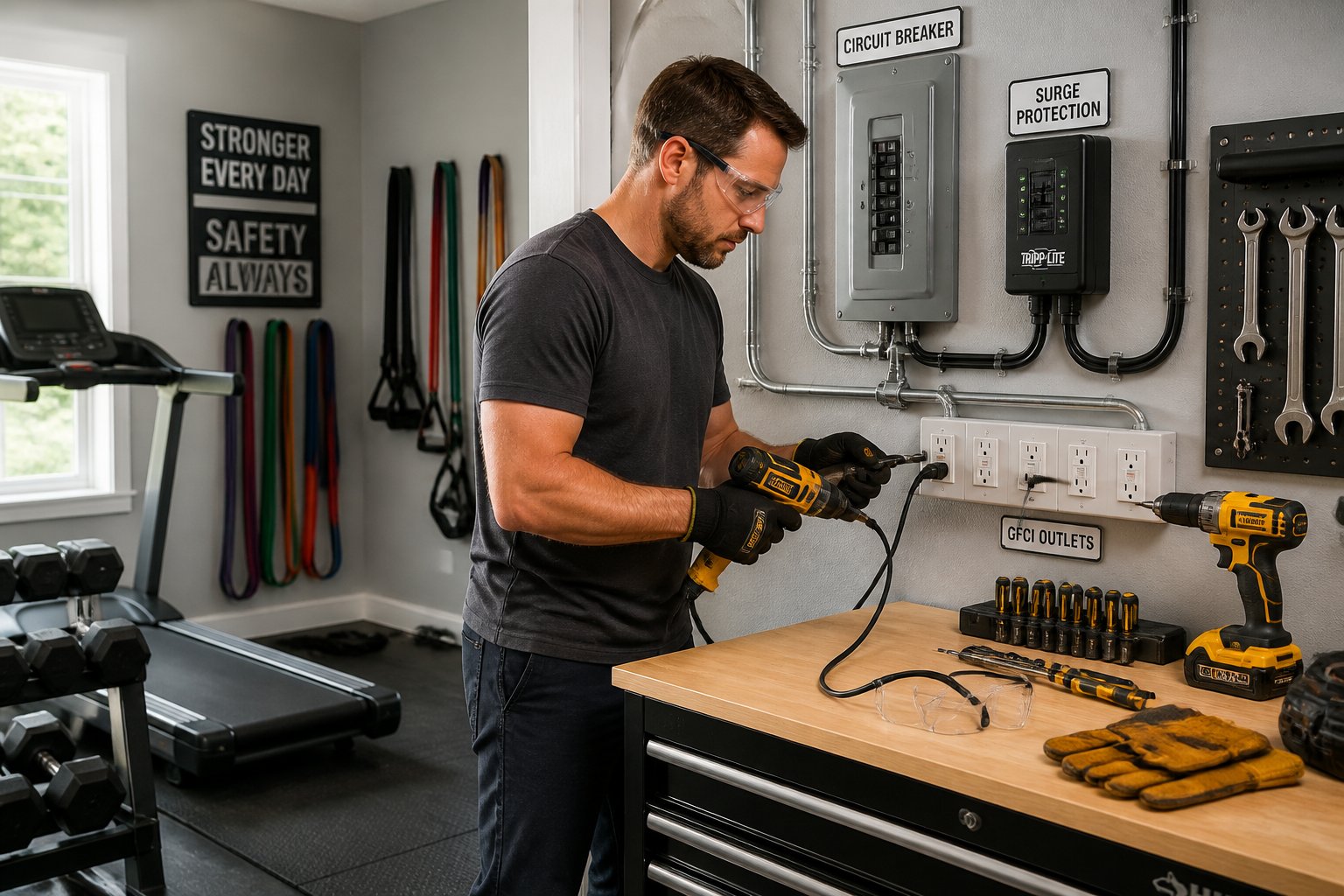
GFCI protection is crucial in garages, basements, unfinished spaces, and anywhere near sinks or concrete floors. In a garage or basement gym, it adds a real layer of shock protection when humidity, spills, or condensation are in play.
How Surge Protection Helps Protect Expensive Equipment
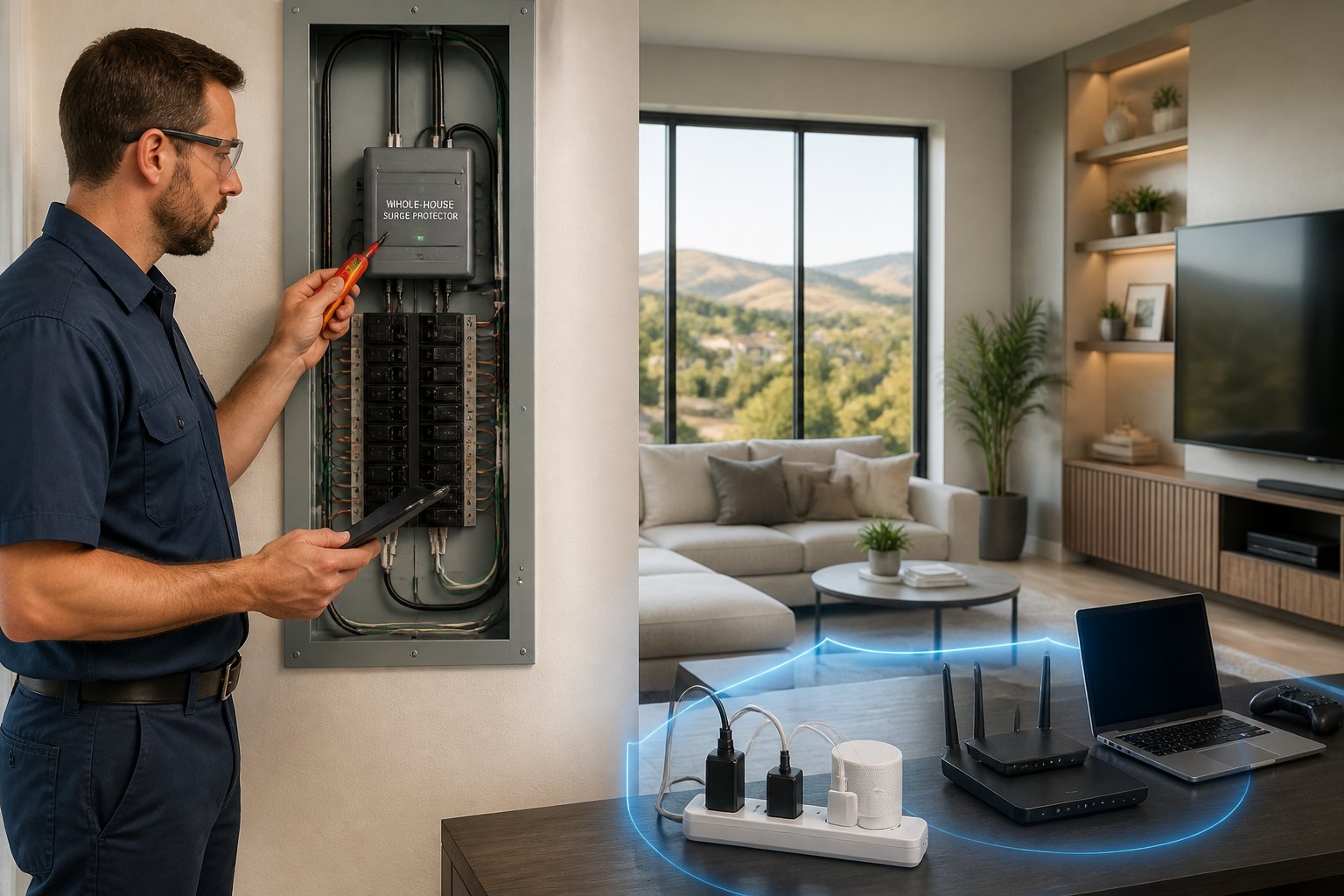
Surge protection shields treadmills, control panels, TVs, smart mirrors, routers, and other pricey gear from voltage spikes. If you rely on electronics for workouts or climate control, it’s just a practical safeguard.
Special Concerns In Garages Basements And Detached Spaces
Detached shops, damp basements, and unconditioned garages deal with bigger temperature swings and more moisture. Use dehumidifiers, keep equipment off bare concrete, and make sure wiring, outlets, and covers are up to the job.
Match Your Power Plan To The Equipment You Actually Use
Your electrical layout should fit the gear you use most—not just what you hope to buy someday. Strength setups, recovery tools, and storage all affect where power is needed and how safely you can move around.
Strength Gear That Changes Room Layout And Safety Needs
A barbell, deadlift platform, bench press, squat area, overhead press, rack pulls, and dips all change how you move through the room. Add bumper plates, the best ones your budget allows, a good barbell for your style, kettlebell storage, a weight tree—suddenly, you need to leave access to outlets, switches, j-cups, spotter arms, and rack hardware.
Popular racks like the rep fitness pr-4000 or some from rogue fitness can shape where outlets go, how much wall clearance you need, and your walking paths. If you’re building for barbell training, focus on safe movement first—then worry about where accessories fit.
Cardio Recovery And Climate-Control Add-Ons
Fans, dehumidifiers, portable heaters, and recovery gear can make your space feel better, but they also add load. If you run both conditioning and strength work in the same room, plan for those devices early so you don’t overload the outlets that power your main training gear.
Storage Choices That Keep Access To Outlets And Panels Clear
Smart storage keeps your electrical panel, outlets, and switches easy to reach. Don’t stack plates, mats, or tall bins in front of panels, and leave space around cords so you can check them or unplug stuff quickly if you need to.
Know The Warning Signs And When To Call A Pro
Electrical problems usually give you hints before turning serious. If you spot those signs early, a licensed electrician can often fix things before they become equipment damage, downtime, or a safety issue.
Repeated Breaker Trips Warm Outlets And Flickering Lights
Repeated breaker trips, warm outlets, buzzing, or flickering lights all signal a problem that needs attention. Usually, it means the circuit’s overloaded, the wiring’s stressed, or the outlet hardware is wearing out faster than it should.
What A Safety Inspection Can Catch Early
A safety inspection can catch loose connections, undersized circuits, moisture issues, worn receptacles, and weak surge protection. It can also show if your dedicated circuits still fit your current setup—which matters if your home gym or workshop has grown over time.
Why Professional Repairs Support Long-Term Reliability
Professional repairs support long-term reliability by fixing the real cause, not just the symptoms. At AAA Electrical Services, same-day service, honest recommendations, and stocked service vehicles help homeowners in Sacramento, Roseville, Folsom, Elk Grove, and nearby areas get safer power with less hassle.
Frequently Asked Questions
What’s the best lubricant to keep home gym machines running smoothly?
A light silicone-based lubricant is usually a good choice for moving parts because it cuts friction without leaving heavy residue. Always check the manufacturer’s advice, though—the right product can depend on the machine and materials.
Is silicone spray safe to use on cables, pulleys, and guide rods?
Silicone spray works well on some gym components, especially where a light, clean lube is best. Use just a little and avoid overspray on grips, belts, or floors—slippery residue can turn into a safety issue.
Can I use WD-40 on gym equipment, or should I avoid it?
WD-40 can help loosen rust or clean off grime, but it’s not usually the best long-term lubricant for workout gear. For parts that need regular protection, a product made for that component usually works better.
How often should I clean and lubricate a Smith machine or power rack?
Wipe down contact points regularly and lubricate moving bits based on how often you train. If you use your home gym a lot, a quick check every few weeks helps you spot wear before it affects safety or smooth movement.
Which lubricant works best for cable machines without attracting dust?
A dry or silicone-based lubricant is usually best, since it helps keep dust down better than heavier oils. Use it sparingly and clean the cable path first so you don’t trap dirt in the moving parts.
What’s a simple maintenance checklist to keep workout equipment in good condition at home?
Every week, take a quick look at bolts, cables, pulleys, handles, and any safety attachments—just to see if anything’s getting worn out or loose. Wipe off sweat and dust after you finish working out (easier said than done, but it helps). Try to keep the floor dry, and while you’re at it, give power cords, outlets, and plugs a once-over. It’s not complicated, but sticking to this routine makes your gear last longer and helps you catch problems before they get annoying.