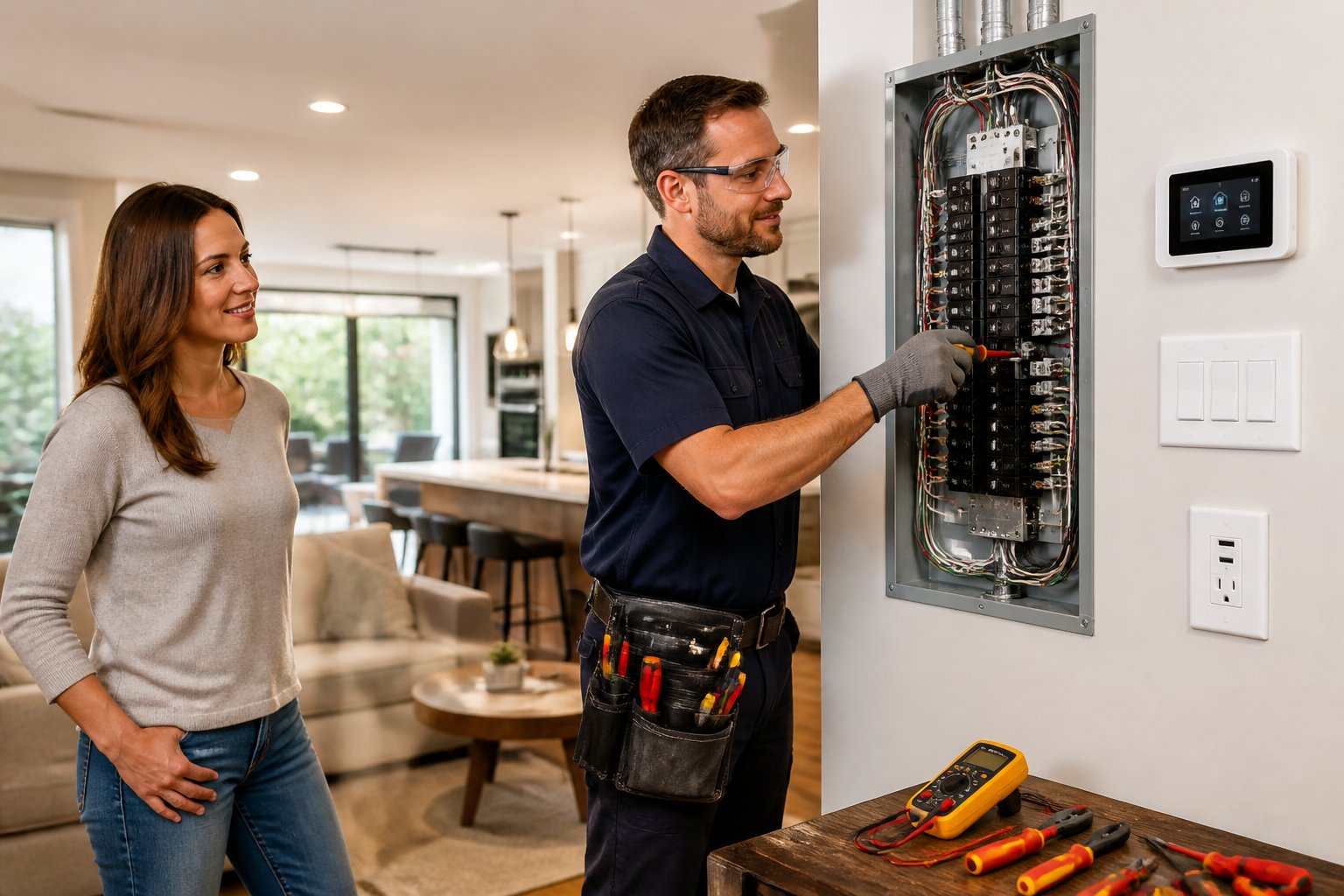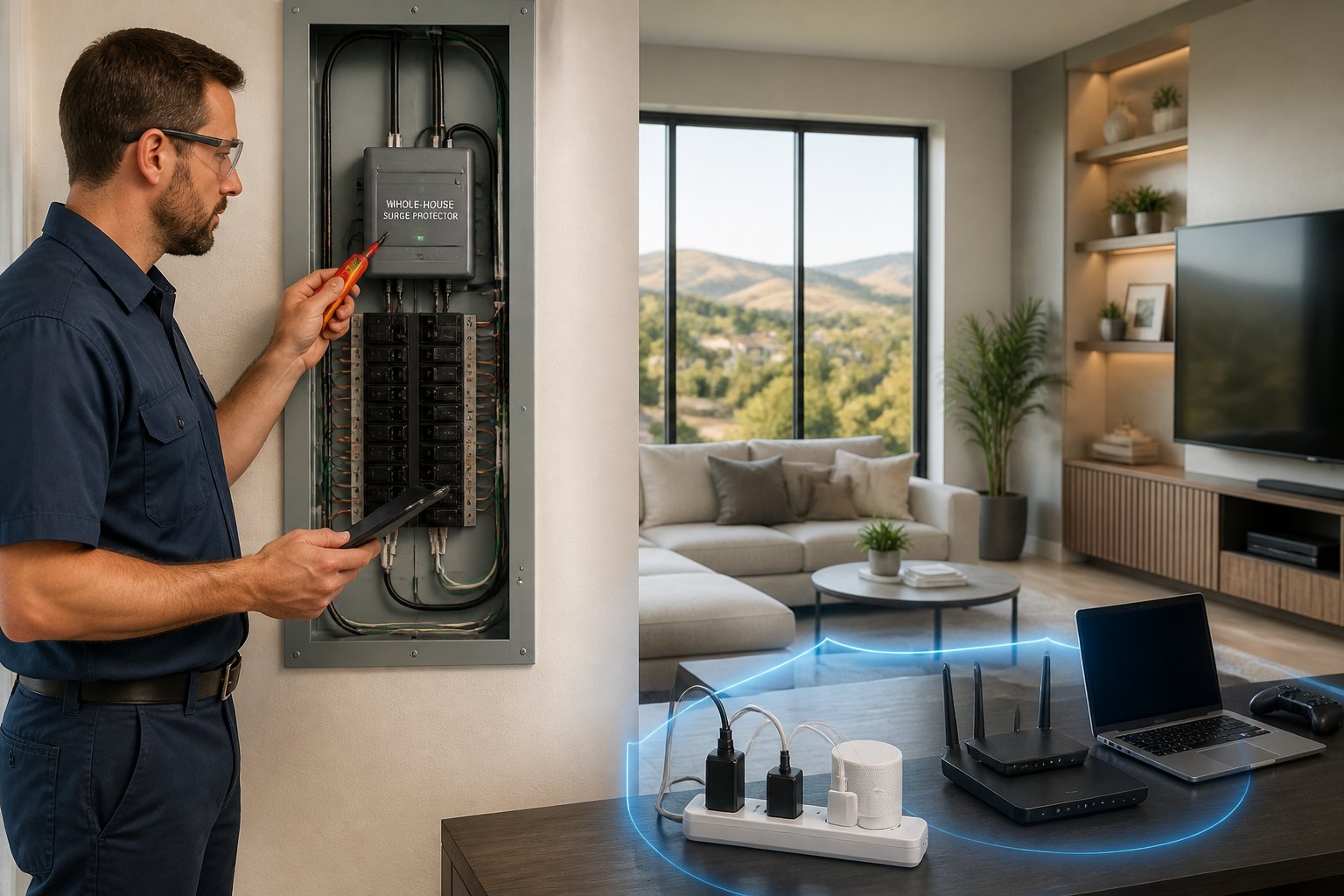
Electricity does its thing quietly for years, so hidden hazards can slip by unnoticed. Arc fault protection steps in to catch one of those risks early, before damaged wires or loose connections can spark electrical fires. For your home, that means a layer of electrical safety focused on fire prevention—not just shock.
If you live in Sacramento, Roseville, Elk Grove, Folsom, or nearby, you might already have some AFCI protection and not even know it. The main idea? Arc fault protection is there to lower fire risk in spots where everyday wiring damage can hide inside walls, ceilings, and outlets.
Key Takeaways
- Arc faults can create heat that a standard breaker just won’t catch.
- Most homes need AFCI protection in living areas and bedrooms.
- Some circuits call for both AFCI and GFCI protection.
What Arc Fault Protection Does
Arc fault protection watches for unsafe electrical arcing and cuts power before things get dangerously hot. A standard circuit breaker handles overloads and shorts, but AFCI protection looks for the telltale signs of an arc fault—think damaged wires, loose ends, or worn-out devices.
What Is an AFCI?
An arc fault circuit interrupter (AFCI) is a device that monitors the electrical pattern on a circuit. When it spots a dangerous arc, it opens the circuit fast enough to stop ignition. Wondering what is an afci? Basically, it’s a fire-prevention device for your home’s wiring.
How an Arc Fault Starts
A series arc kicks off when current jumps across a damaged wire, loose splice, or failing connection. That heat can set off insulation, dust, or even wood nearby. The scary part? It’s often hidden—so arc fault protection really matters for everyday wiring.
Why a Standard Breaker Misses It
A standard breaker trips on high current, not the small, jumpy signature of an arc. Arc-fault circuit interrupters (AFCIs) focus on catching that weird pattern before it becomes a fire hazard. In real life, an AFCI can react to trouble that never gets to overload levels.
Series Arc Vs. Ground Fault
A series arc is current jumping a break in a wire; a ground fault is current going to ground through a wrong path. Arc-fault protection fights electrical fires, while ground fault protection aims to prevent shocks. They tackle different problems.
Where Protection Is Usually Required In Homes
The nec (that’s the national electrical code) sets the AFCI baseline for most U.S. homes, but your local electrical code can add its own twists. The main rules hit 15- and 20-amp branch circuits, and the details change with each code cycle and where you are in the house.
Rooms Commonly Covered Under NEC 210.12
Under nec 210.12, both the 2020 nec and 2023 nec call for AFCI protection in a bunch of living spaces—bedrooms, living rooms, dining rooms, family rooms, hallways, closets, laundry areas, kitchens, and similar spots. If you’re hunting for afci exceptions, the code details are what matter.
Finished Basement Vs. Unfinished Basement
A finished basement usually falls under the same rules as other living spaces. An unfinished basement might get treated differently, depending on the circuit and local code. Easiest way to check? See if the basement has lighting or outlets tied to covered living areas. An electrician can tell you how your home stacks up under the current code.
15- and 20-Amp Branch Circuits Homeowners Should Know About
Most 15- and 20-amp branch circuits in living areas are where AFCI rules really matter. These circuits feed the outlets, lights, and fixtures you use all the time. If you’re remodeling or adding a room, these circuits deserve a closer look.
Why Local Rules Can Change the Final Answer
Your local code might not match the NEC, since cities and counties adopt updates at different times. That can change whether a circuit needs an upgrade, if an exception applies, or if swapping a device is enough. A quick code check now can save you headaches later.
AFCI, GFCI, And When You Need Both
AFCI and GFCI devices cover different hazards. Sometimes you need both—especially in newer work, where a dual-function breaker makes things simpler.
How AFCI And GFCI Protection Differ
AFCI protection aims to prevent fires by detecting arcing. GFCI protection is all about preventing shocks by spotting current leaks to ground. A gfci is for people safety in wet or conductive places, while an afci is for fire safety in your wiring. Both matter, just in different ways.
Spaces That Often Need AFCI/GFCI Protection
Kitchens, laundry rooms, garages, bathrooms, basements, and outdoor spots usually need some mix of gfci requirements and AFCI. The details depend on your circuits and which code your home follows. Got outlets near sinks, unfinished areas, or remodels? Both protections might be needed.
When a Dual-Function Breaker Makes Sense
A gfci circuit breaker, dual-function breaker, or dual-function afci/gfci breaker gives both protections on one circuit. That’s handy if your panel is tight on space or you need both fire and shock protection. For many homes, it’s a tidy, practical upgrade.
Devices, Installation Options, And Code Upgrades
You can add protection at the panel or at the first outlet on a circuit. The best choice depends on your wiring, panel setup, and the work being done. AFCI installation can come up when extending a circuit, swapping devices, or updating old wiring.
AFCI Breakers Vs. AFCI Receptacles
An afci breaker protects the circuit from the panel. An afci receptacle covers everything downstream from where it’s installed. Either can meet code, depending on the setup. A licensed electrician can help you pick what works best for your home.
Why Combination AFCI Is Common Today
Combination afci and combination afci breaker types are everywhere now because they catch more arc fault issues than old-school models. They’re used in new builds, remodels, and upgrades to match current code. Makes sense for long-term reliability.
What Happens When You Extend a Circuit
If you extend a circuit, you might need extra protection, depending on what you changed and how the circuit’s used. The 2020 NEC brought in more nuance for extensions or changes—so a simple add-on isn’t always treated like the original wiring. Best to review and see if what you’ve got still meets the mark.
When an Electrical Inspection Is Worth Scheduling
An electrical inspection is smart before a remodel, panel swap, or big outlet upgrade. It’s also a good idea if you’re unsure whether your current setup meets code after past work. In Sacramento, a quick, code-savvy visit from AAA Electrical Services can help you move forward confidently.
Common Problems In Older Or Modified Wiring
Older homes and past DIY jobs can mess with AFCI devices or point to real wiring trouble. If you’ve got tripping breakers, mixed wiring, or circuits that have changed over time, a licensed electrician can help figure out what’s just a quirk and what’s a real safety risk.
Nuisance Tripping and What It Can Mean
Nuisance tripping happens when an AFCI reacts to harmless signals from a device, motor, dimmer, or old appliance. Or, it could mean there’s a loose connection, worn outlet, or damaged cord that needs fixing. Either way, don’t ignore the breaker—it’s trying to tell you something.
Shared Neutral and Shared Neutrals Issues
A shared neutral setup can mess with AFCI protection if the wiring isn’t arranged as expected. These setups need careful handling, since current might return in ways that confuse the device. This crops up a lot in homes with partial updates.
Multi-Wire Branch Circuit Concerns
A multi-wire branch circuit can work fine if wired right, but it can also cause breaker trips if the neutrals and breakers aren’t matched up. Two hot wires sharing a neutral need the right breaker setup and handle ties when required. If the circuit’s been changed, it’s best to have a pro check it out.
Why Dedicated Neutral Wiring Matters
A dedicated neutral lets AFCI devices read the circuit accurately and keeps current on the right path. Shared returns, loose connections, and mixed neutrals make troubleshooting a headache. Clean wiring means better protection and easier repairs.
When To Call a Professional For Next Steps
If your breakers trip a lot, your panel’s packed, or you’re planning new outlets, lights, or a panel upgrade, it’s time to call in a pro. A licensed electrician can check the wiring, confirm code compliance, and give you clear options for afci installation—without overdoing it.
Signs Your Home May Need an Upgrade
Frequent trips, warm outlets, buzzing, flickering, or old wiring all mean it’s time for a closer look. You’ll also want an update if you’ve added an EV charger, generator, or new kitchen circuits. In Sacramento, these upgrades are when old protection usually gets replaced with something more reliable.
What To Expect From a Code-Focused Service Visit
A code-focused visit usually means testing the panel, checking labels, reviewing device placement, and confirming what your local electrical code wants. You should get honest advice, tidy work, and a clear explanation of what can be fixed right away. Stocked vans and experienced techs help a ton here.
Questions To Ask Before Repairs Or Panel Changes
Ask if the circuit needs an AFCI breaker, an AFCI receptacle, or both. Ask how the fix affects future upgrades, if your wiring supports the change, and if the work will pass inspection. Getting clear answers now saves you time and money later.
Frequently Asked Questions
What is arc-fault protection, and why does it matter for home safety?
Arc-fault protection is a device that catches dangerous arcing in wiring and cuts power before things can heat up and start a fire. It matters because a lot of electrical fires start behind walls, where you just can’t see the warning signs.
Where in a home are AFCI breakers typically required by electrical code?
AFCI breakers are usually required on most 15- and 20-amp branch circuits in living spaces—bedrooms, family rooms, dining rooms, hallways, closets, kitchens, and similar areas. The specifics depend on which NEC edition your area uses and any local changes.
What are the two common ways to add AFCI protection to a circuit?
You can add protection with an AFCI breaker at the panel or with an AFCI receptacle at the first outlet. The right pick depends on your wiring, the device location, and whether you also need GFCI.
How is AFCI protection different from GFCI protection, and when would you need each?
AFCI protection cuts fire risk by spotting arcing; GFCI protection cuts shock risk by catching leaks to ground. You’ll usually need AFCI in living spaces and GFCI in wet spots—and sometimes both, depending on the room.
Why does an AFCI breaker keep tripping, and what should a homeowner check first?
An AFCI breaker trips for a bunch of reasons—maybe there’s a real wiring problem, a loose connection somewhere, or even a damaged cord. Sometimes, it just doesn’t like the way a device behaves and gets suspicious. If this keeps happening, try unplugging anything you’ve added recently, look for cords that look beat up, and see if it’s always the same circuit causing trouble. If you’re still stumped, it’s probably time to call a licensed electrician.
In an older home, when should you consider upgrading to AFCI breakers?
Think about an upgrade if you're swapping out your panel, remodeling, adding new circuits, or honestly, if your breakers keep tripping for no good reason. If you live in Sacramento, Carmichael, Fair Oaks, or close by, it's probably a smart move to get an electrical inspection—not just for safety, but to make sure you're up to code.