Keeping your outdoor electrical system safe isn’t just about keeping the lights on—it’s about protecting your family, your equipment, and your home from shocks and fires. Sacramento-area homeowners know all too well how hot summers, rainy winters, and constant outdoor use can wear down electrical gear. If you want to avoid surprises, check your protection devices, watch for moisture, keep wiring shielded, and schedule routine maintenance before little issues get out of hand.
Honestly, sometimes you just need a good, licensed electrician—someone who shows up with the right parts, gives it to you straight, and doesn’t leave a mess behind.
Key Takeaways
- Test safety devices before each season.
- Keep moisture away from every outdoor connection.
- Call a licensed electrician for anything damaged or unclear.
Check GFCI Protection First
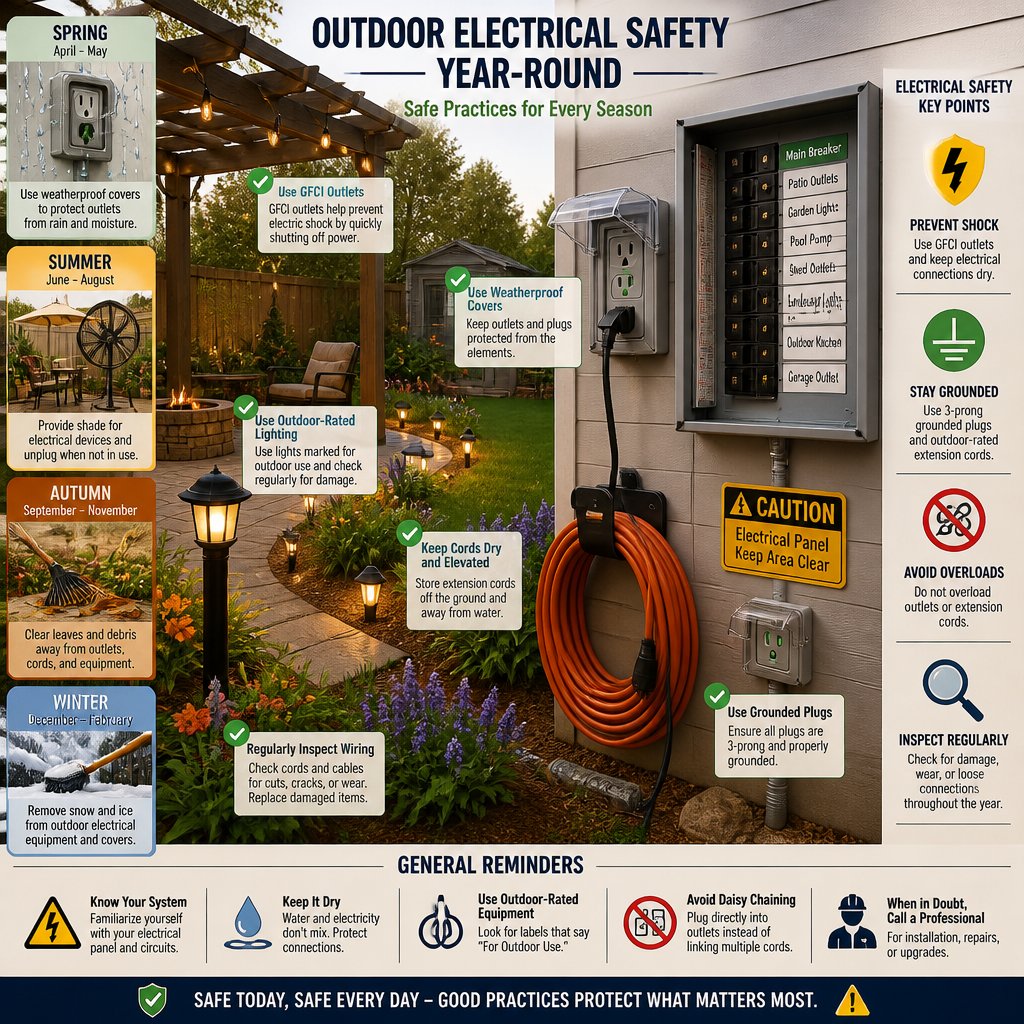
GFCI protection is your first line of defense outside. A working ground fault circuit interrupter cuts power fast if it senses a problem, lowering the risk of shock around water, dirt, or metal fixtures.
Where GFCI Outlets Matter Most Outside
You need GFCI outlets anywhere outdoor outlets might get wet—think patios, pool areas, garages, side yards, and landscape lighting. Basically, if rain or sprinklers can reach it, make sure GFCIs are in place and working.
How To Test GFCI Outlets Safely
To test GFCI outlets, press the test button and see if power shuts off. Press reset and check that power returns. If the outlet won’t trip, won’t reset, or feels warm, stop using it and call a licensed electrician.
Signs GFCIs Need Replacement
A worn GFCI might trip too often, refuse to reset, or wiggle when you plug something in. Watch for physical damage, discoloration, buzzing, or repeated nuisance trips—those are all red flags. Swap out bad GFCIs quickly to keep the rest of your system safer.
Inspect Outdoor Outlets, Covers, And Fixtures
Outdoor outlets and lights need to stay sealed, secure, and rated for outdoor use. After storms or yard work, just take a minute to look for trouble before it gets serious.
What To Look For After Rain And Irrigation
Check for cracked outlets, loose plates, rust, corrosion, or water inside boxes. Make sure covers close all the way. If you see water inside, don’t use that outlet until it’s checked and safe. Moisture can cause sneaky wiring problems you don’t want.
When Weatherproof Covers Are Required
You need weatherproof covers anywhere outlets might get wet while in use—especially where cords stay plugged in outside. For California homes, this matters near sprinklers, patios, and side yards.
Choosing Weatherproof Outlet Covers That Stay Protective In Use
Pick weatherproof covers that close tightly over cords, not just empty outlets. Look for ones that latch easily and are rated for outdoor use. If a cover won’t seal, swap it out before the next busy season.
Protect Wiring From Moisture, Sun, And Physical Damage
Outdoor wiring takes a beating from sun, rain, tools, and even critters. The right materials and smart routing make a huge difference.
Why Outdoor-Rated Wiring Matters
Outdoor-rated wiring handles UV, temperature swings, and moisture better than indoor cable. That extra protection helps insulation last longer and stops breakdowns. Using the right stuff is a no-brainer for reliability.
Using Conduits In Exposed Areas
Conduits shield wiring where it’s exposed, low, or near driveways, fences, AC units, and garden beds. Proper conduit installation also makes future repairs easier.
How To Prevent Short Circuits Around Landscaping And Tools
Keep shovels, trimmers, edgers, and heavy pots away from buried or exposed lines. Don’t bury extension cords or use damaged cords for permanent power. Label things clearly and keep cords protected to avoid shorts.
Maintain Proper Grounding And System Integrity
Proper grounding safely channels stray electrical energy away from people and gear. Good grounding lowers shock risk and keeps your outdoor system stable.
Why Proper Grounding Reduces Shock Risk
When grounding’s done right, fault current goes safely away from metal parts and outlets. That way, if you touch something damp or metal, you’re less likely to get shocked. Grounding and GFCIs together make a solid safety barrier.
Grounding Rods And Exterior Connections
Grounding rods and exterior connections should stay tight, rust-free, and properly bonded. If you spot a loose or corroded rod, get it fixed. Outdoor equipment, subpanels, and metal boxes all need solid grounding.
When A Licensed Electrician Should Inspect The System
Call a licensed electrician after flooding, lightning, a big remodel, or if breakers keep tripping. Also, if you notice tingling, flickering lights, or corrosion, get it checked. AAA Electrical Services can look at grounding during other service calls if you want peace of mind.
Follow A Simple Seasonal Maintenance Routine
A steady maintenance routine helps you spot wear before it becomes a problem. In Sacramento, Roseville, Elk Grove, Folsom, and nearby areas, the mix of weather means seasonal checks are extra useful.
Spring And Summer Checks For Heavy Outdoor Use
Before using patios, pools, or yard gear more often, inspect outlets, cords, lights, and fans. Test GFCIs, check covers, and look for sun damage. Good time to check landscape lighting and outlets for summer gatherings, too.
Fall Prep Before Storms And Holiday Lighting
Before storms and holiday lights, clear debris from fixtures and replace cracked covers. Use extension cords only for temporary setups, and keep plugs off the ground. If you’re adding more lights, make sure the circuit can handle it.
Winter Protection For Cold, Wet Conditions
In winter, keep outdoor connections dry and check them after wind or rain. Remove standing water near outlets, close covers tight, and don’t use damaged cords in wet spots. These quick checks can save you from outages and repairs.
Know When To Call For Professional Repairs Or Upgrades
Some outdoor electrical jobs you can handle, but others need a pro—especially if things get weird, hot, or wet. When in doubt, don’t risk it.
Warning Signs Homeowners Should Not Ignore
Burn marks, buzzing, tripping breakers, broken covers, flickering lights, or warm fixtures? Don’t brush those off. Loose outlets, exposed wires, or damaged cords are real safety issues.
Repairs That Need Same-Day Attention
If an outdoor outlet sparks, a breaker won’t stay on, water gets in a fixture, or you lose power to yard or security lights, call for same-day service. Fast repairs from licensed electricians keep things safe and stop more damage. Clear advice helps you decide what’s urgent.
Upgrades That Improve Long-Term Safety
Upgrading outdoor electrical setups can make life easier and safer—think weatherproof outlets, new GFCIs, better grounding, surge protection, EV charger prep, or updated lighting circuits. These improvements help future-proof your home and support energy efficiency.
Frequently Asked Questions
What should I do if a power line is down in my yard or near my home?
Stay far away and keep everyone else—including pets—clear. Treat it as live until emergency crews or the utility say otherwise.
How can I safely report a broken utility pole or damaged power line?
Call your local utility or emergency services right away. Give the location and describe what you see. Don’t touch anything near the wires.
Is it safe to drive over a fallen power line, and what should I do instead?
Don’t do it. Stop well back, stay in your vehicle unless there’s a fire, and wait for trained responders.
Can I leave an outdoor extension cord plugged in all the time, or should I unplug it?
Unplug outdoor extension cords when you’re not using them. Permanent outdoor power should come from real outlets, weatherproof covers, and installed wiring—not a cord that’ll wear out or soak up water.
What’s the best way to waterproof an outdoor electrical connection to prevent shocks and damage?
Use a connection made for outdoor use, with a weatherproof box, tight seal, and a cover that protects the plug even while it’s in use. Not sure it’s sealed right? Let a licensed electrician check it out.
How can I keep trees and branches from becoming an electrical hazard around overhead power lines?
Trim trees so they stay well away from overhead lines, but don’t risk doing it yourself if they’re anywhere near the wires. If you notice branches getting close to live power lines, it’s really best to call your utility company or a licensed electrician. They’ll know how to handle it safely, and honestly, it’s just not worth the risk.